
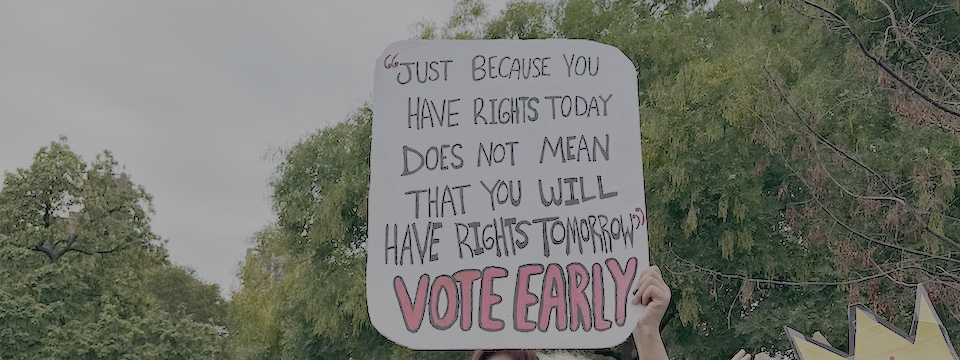
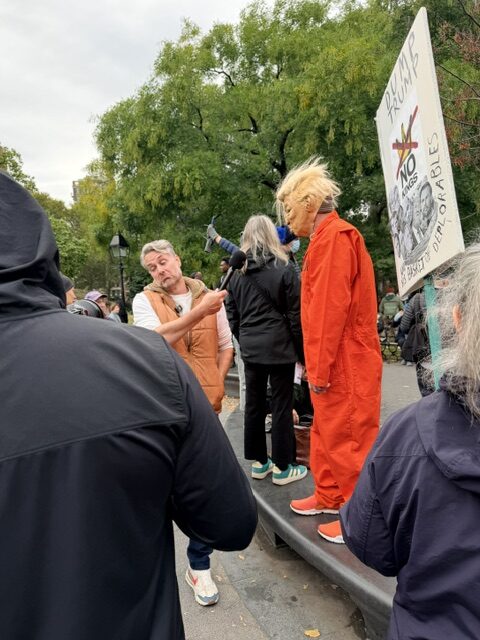
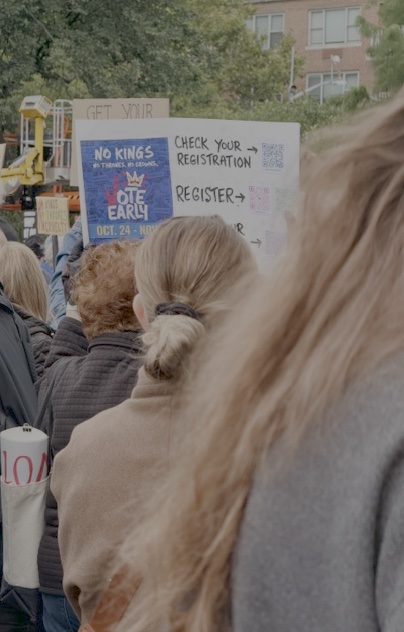
Yesterday’s No Kings events around the country focused on getting out the early vote rather than marching in protest of government policies. And for good reason. The midterm elections are coming in two weeks, and a Democratic victory in House and Senate races, as well as governorships and state legislatures, promises to act as a check on an out-of-control regime. With Democrats in control of the House and/or Senate, Congress can begin investigating corruption and lawbreaking on the part of the regime, as well as its alliance with the Russian dictator Putin in his war on Ukraine, an alliance that openly breaks the Lindsay O. Graham Sanctioning Russia and Iran Act of 2026, which Trump signed a month ago.
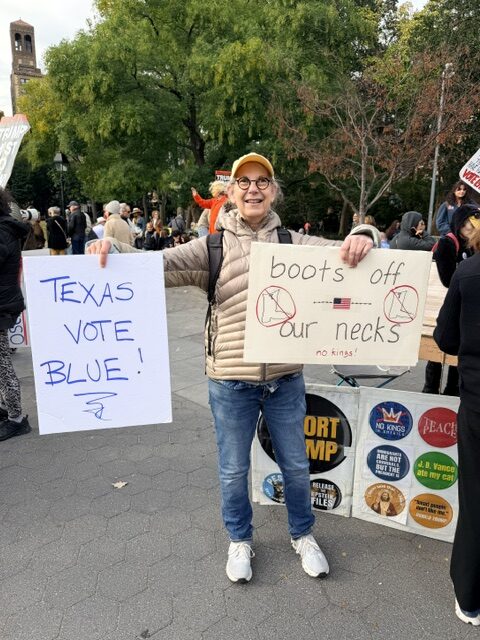
For the attendees at the rally and many people who are planning to vote in the next couple of weeks, this midterm election represents a last chance to stave off the process of autocratic consolidation by which a fragile democracy gives way to a durable autocracy. As I wrote in my assessment of 21st century dictatorships, what differentiates these from the dictatorships of the 20th century is that virtually all of them replaced democracies with autocracies by means of democratic elections rather than military coups or civil wars. Whether or not the anti-democratic candidates stated their positions openly during the campaign, once they were elected, they tilted the playing field to make sure they and their political parties would never lose another election. The most successful practitioners, such as Putin and Lukashenko, eventually banned serious opposition parties and arrested, exiled, or assassinated both leaders and ordinary party members.
Hence the paradox. An open democratic system allows all parties to participate on an even playing field and lets the voters decide. But voters can make decisions they later regret! In an open democratic system, the voters who change their minds can vote differently in the next election and hopefully reverse the policies that resulted from their initial vote. However, bad actors — those who do not want to compete under the rules of a democratic system but rather take all the power for themselves — can run for political office and compete just like everyone else, only to change the rules or mobilize the military to keep themselves in power if they win.
During the 2024 election, Trump made no secret of his anti-democratic proclivities. Besides insisting that the 2000 election had been stolen from him and fomenting a failed insurrection to install himself in the White House forever, he told audiences, “get out and vote, just this time…you won’t have to do it any more. Four more years, you know what? It’ll be fixed, it’ll be fine, you won’t have to vote any more.”
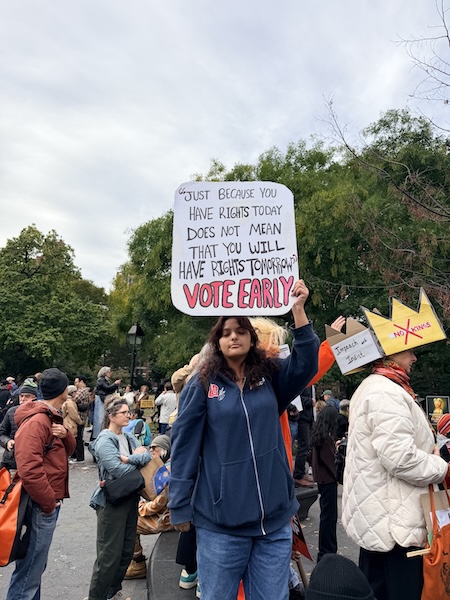 I’m sure that many people in the U.S. consider long, polarizing electoral campaigns — and the endless requests for donations to carry them out — to be annoying. Maybe some will be relived that they don’t have to put up with any more stressful election seasons. I think that the first two years of Trump’s second term demonstrate the folly of these beliefs. Once you can’t vote out someone who only does what he wants to do, and not what you want the country to do — whether it’s bring down inflation, fight waste and fraud and corruption, allow women to make their own healthcare decisions, stay out of Middle Eastern wars, or stand up to the expansionist threats of Russia and China — you have zero chance in affecting the direction of your own life or the life of the country. You’re in the position stated by ancient Greek historian Thucydides in which “The strong do what they can and the weak suffer what they must.”
Democracy is the way ordinary people throughout history have banded together to make themselves strong against predators and to make own their lives better. But we need to choose wisely, which means turning away from those who tell us “vote for me and you’ll never have to vote again” or show us by their actions that this is their goal. And it means reasserting the rule of law against those who, once elected, have disenfranchised and otherwise silenced the people, stolen from the people, allied with dictators, and used their ill-gotten power to destroy lives.