
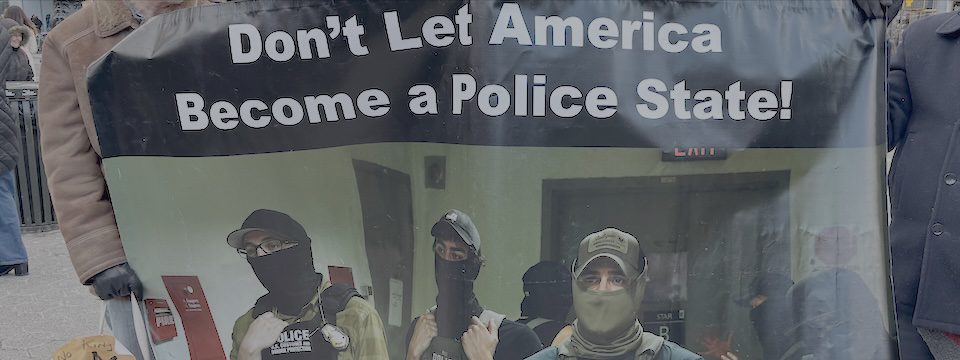
My post from November 2024, “The Lost Democracies of the 21st Century,” has turned out to be one of the most widely read pieces on this blog. And for good reason. The fears many had of Trump becoming “dictator on Day One” and remaining so indefinitely, with the help of a supine Congress and a complicit Supreme Court, seem to be bearing out in reality. It’s not over yet, but we will see what happens in the midterm elections, when parties in power typically lose seats and his leadership is historically unpopular. In a free and fair election, he’s on track for a shellacking.
Yesterday, a commentator named Meg wrote in with a request:
Thank you for this very thoughtful analysis. Even though this piece was authored less than two years ago, I wonder if you might consider an update. A lot has happened in that amount of time, and we seem to be marching ever-closer to a dictatorship. I would like to know what U S citizens can learn from other countries where a popular uprising ended the dictatorship of an elected official. Like many others, I am concerned at how little power we the People actually seem to have against a dictatorial machine that is systematically eliminating the rights of its citizens.
Given the events of the past month, both within the U.S. and internationally, I decided to postpone my plans to write about book banning and the careless words of our National Ambassador for Young People’s Literature to address this issue. Specifically, I wanted to talk about the recent election in Hungary and what it means for the restoration of democracy in 21st century elected autocracies.

Viktor Orban was one of the people I focused on in my earlier piece. Elected in 2010, he and his lieutenants in the Fidesz Party moved quickly to change the electoral system giving conservative rural areas an outsized voice through apportionment that resembled gerrymandering, tilt the judiciary in his favor, shut down unsupportive media outlets, ban books, reward supporters, and harass opponents. Orban became the model for the Heritage Foundation and its Project 2025 to establish a hybrid system in which elections happened but the regime’s opponents could never win. In his first few elections, Orban took advantage of Hungary’s relatively quick recovery from the 2008 economic crisis and the country’s increasing prosperity. An influx of migrants in 2015 as a result of Syria’s (and its ally Russia’s) bombing campaign against its own people, drove even more people into the arms of Fidesz. By then, Orban had expelled the prestigious Central European University and was inking a corrupt deal to bring China’s Fudan University to take its place.
With few threats to his power, Orban and his cronies looted the government, and their antidemocratic measures led to the suspension of EU funds. By the early 2020s, the country’s economy was in free fall; Hungarians were now among the poorest people in Europe. A pardon scandal that embroiled his ex-wife led Péter Magyar to quit the party in February 2024 and declare his candidacy with a small opposition party called Tisza, named for a river in eastern Hungary. The 44-year-old Magyar proved to be charismatic and energetic, and his campaign against corruption and economic stagnation appealed even to rural voters who had supported Orban in the past. Getting the support of these rural voters, along with urban liberals and young people worried about their future, propelled Magyar to a double-digit electoral victory and the two-thirds majority his party needed to undo the antidemocratic constitutional amendments that Orban implemented over the 16 years of his misrule.
The April 2026 election in Hungary means that one of the 21st century autocracies has fallen, and it has done so through the same electoral means by which Orban first came to power. Many people, myself included, believed that Orban’s regime would only end through his death. How did Magyar pull off the win, in a system constructed to make such a win almost impossible? And can Magyar’s victory be replicated in other places where an elected leader turned into a dictator.
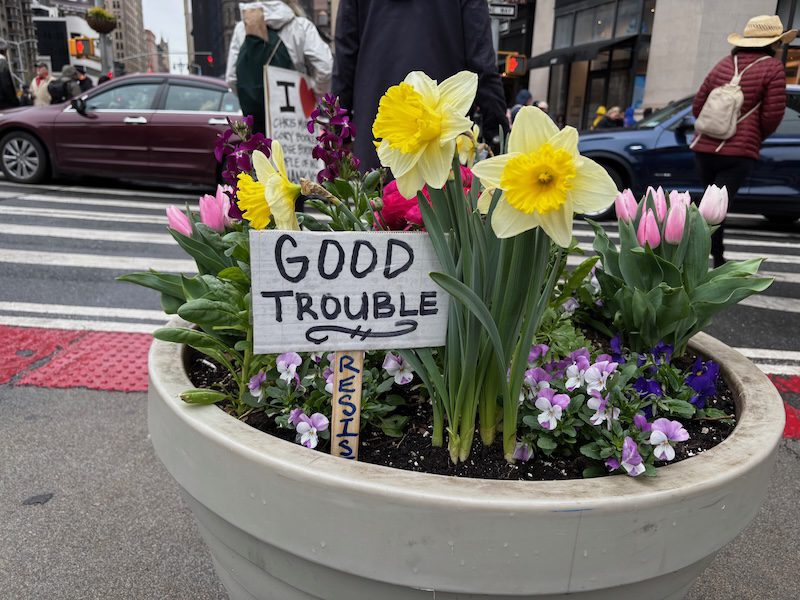
One cannot deny Magyar’s own personal and political skills, and his conservative bonafides that made rural voters comfortable with his leadership while the level of his outspokenness against corruption and for democracy made him a hero for young voters. He was able to give a resigned electorate hope that if they “voted harder,” they really could win. In the end, almost 80% of eligible voters turned up at the polls. Large nationwide rallies before the vote served as a show of force, demonstrating Magyar’s popularity and warning Orban of the popular fury he would face if he cancelled or overturned the election. Rolling up a huge margin of victory also made it more difficult for Orban to challenge the results.
But there’s another factor that limited Orban’s power to nullify the election. Hungary is in the EU. The country had already lost much of the funding it needed to help its economy because of Orban’s corruption of the judiciary and censorship of the press. A cancelled or voided election would have likely led to Hungary’s expulsion. Furthermore, Orban could not count on Russian military intervention to prop up his regime after losing the vote the way Belarus’s dictator Alexander Lukashenko had. Lukashenko lost in 2020 by a similarly large margin but was able to put down the mass rebellion with the help of Russian troops.
And why could Russia not send troops to help Orban last month? Because Ukraine is in the way! Since Putin failed to conquer Ukraine in three days in 2022, Russia doesn’t share a border with Hungary the way it does with Belarus. In this way, Ukraine’s fight for democracy and nationhood is the fight for all of Europe, as well as an inspiration for anyone who doesn’t want their country ruled by a dictator, foreign or domestic.
Could Péter Magyar and his successful campaign for democracy in Hungary be a model for regime opponents in the U.S., the way Orban was a model for those in power? In some ways, yes. Poor economic conditions — in the U.S., high inflation exacerbated by the war of choice in Iran and stagnant employment — blatant corruption, and suffocating censorship link the autocratic regimes of both Hungary and the U.S. High voter turnout motivated by disgust at the regime could flip highly gerrymandered districts with thinner Republican margins, as happened in Hungary. That may be enough in November to limit the regime’s power and give people hope for a pro-democracy president in 2028.
However, democracy supporters in the U.S. face several major obstacles in comparison to Hungary. Hungary is a small nation in the center of Europe, a member of the EU and part of Schengen’s open borders in Europe. On the one hand, this drove many Hungarians out of the country to escape Orban’s autocracy, providing him with a safety valve against widespread discontent (though they could more easily come back to vote). But there were also EU-imposed limits to what Orban could do to stay in power. He couldn’t imprison Magyar or ban him from running, although he certainly threatened to do so. He couldn’t cancel or overturn an election without consequences, and he couldn’t send military or paramilitary forces to shoot people in the streets. So far in the U.S., we’ve had paramilitaries shoot citizens in the streets. We’ve had efforts to imprison prominent opponents of the regime, though none has yet been convicted of a crime or jailed longer than overnight. We’ve now had one clear election result overturned in Virginia and one election cancelled in Louisiana, with so far barely a peep of protest. And while the No Kings! rallies have been impressive in the number of rallies nationwide and the number of attendees at many of them, they have occurred infrequently and nowhere near the turnout percentage of rallies in Hungary or in Poland, where voters also ended the stranglehold of the anti-democratic Law and Justice party in 2023.
I don’t think people in the U.S. understand yet how much these large rallies can accomplish as a show of force to unsettle autocrats. I also don’t think we have a leader yet of the caliber of Péter Magyar to challenge the MAGA mass movement. The size of the country presents a challenge, as does a corporate media that has consistently undercut liberal leaders; the highlighting of Biden’s age and infirmity while sanewashing Trump’s obviously deranged threats (beginning with “dictator on Day One”) is but one example.
Ultimately, we in the U.S. have to acknowledge that unlike in Hungary, which is both part of the EU and protected by Ukraine from military interference from Russia, no one is going to save us but ourselves. We will need courage and sacrifice, but we will also need to reconnect with our neighbors, to change hearts and minds, and to convince our neighbors that there is hope, and democracy is worth the fight.



Pingback: The U.S. at 250: An Anniversary or a Funeral | Lyn Miller-Lachmann