Last week I discussed point of view in fiction for children and teens and explored why first person present tense narratives are so popular in upper middle grade and YA novels. Today I’ll talk about another feature of a majority of novels for young readers — the compressed timeframe.
Many novels for adults are sagas, spanning years, decades, or generations. However, novels for young readers take place over a limited period of time. My books are an example. With the exception of the first two chapters that function as a kind of prologue, showing the moment Daniel’s father was arrested and what happened to him in prison, all of the action in Gringolandia takes place between February and August 1986. (There’s also an epilogue, three years later.) Gringolandia‘s sequel, Surviving Santiago, takes place during the summer vacation of 1989, when Tina visits her father in Chile. Rogue‘s action occurs between March and June, four months of spring. The publisher’s description of Moonwalking calls it a story of a friendship “for a season” — the autumn of 1982. Torch begins with Pavol’s self-immolation in March 1969; although there’s a flashback to events the previous year, the story ends in July of that year. Eyes Open has the longest timeframe of my published novels, beginning in the fall of 1966 and ending almost a year later. In fact, a year seems to be a common outer limit, emphasizing how much the protagonist has changed over a very consequential 12 months.
Why do novels for children and teens feature compressed timeframes, in contrast to their adult counterparts? I see five principal reasons.
The first is a child or a teen’s perception of time. A year is a long time in the life of someone who hasn’t lived very many years. When my daughter began teaching first grade, she told me that after the winter holiday she had to reteach the classroom rules because the students had forgotten them. I said that the three-week vacation for them was like three months for us. Time moves very slowly for children, and it moves ever more quickly the older one gets.
Children also have short attention spans, in large part because of their cognitive development and limited experience. (This doesn’t take into account the negative effects of screens, which have ruined even adults’ attention spans.) It’s harder for them to read about and retain events taking place over a long period of time. Judicious use of backstory and flashbacks is a good way of presenting events taking place before the timeframe of the story.
The third reason, related to the first two, is that novels for children and teens often focus on “firsts” — the first day of a new school, making a new friend or losing a longtime friend for the first time, the maiden journey to a faraway place, first love. These initial experiences take place in limited time frames, and readers encountering their own firsts are far more interested in the protagonist’s first time than in the second time or any thereafter.
The fourth reason is that change happens quickly in the life of a young person. Their bodies are growing and changing. They learn new things both in and outside of school. The reason we send children to school even though they may seem too young to sit still, listen to the teacher, and appreciate what they’re learning is that children learn a lot more quickly than adults do. Their brains are growing, absorbing new information and experiences, and don’t stop until about age 24. Children who immigrate to a new country learn the language almost immediately, while their parents and grandparents struggle with the grammar, vocabulary, and speaking. Having learned multiple languages over the years, beginning in middle school, I know that the younger you are, the easier it is to learn. Novels for young readers are all about change and growth, and the difficulties that go along with these processes. And the events happen in a shorter time period than they would for an adult.
Finally, books for young readers need a sense of urgency and forward motion. Most aren’t going to read a book for the beautiful prose or the exquisitely rendered settings. They don’t want characters who spend a lot of time reflecting on things that happened a long time ago. Kids want action and strong emotions in their stories because they are actively engaged with their world, trying things out for the first time, and they experience strong emotions that they struggle to handle. Longer timeframes stretch out action and dilute emotion. Shorter timeframes don’t leave much space between a character’s decisions and actions and their consequences, heightening emotions and serving as a force pushing the character to change. And for the impatient child reader, the ticking clock — something that must happen soon, or else — guarantees that pages will be turned and the book will not be set aside until the very last page. (Unless the reader doesn’t care about the characters, but that’s a different issue.)
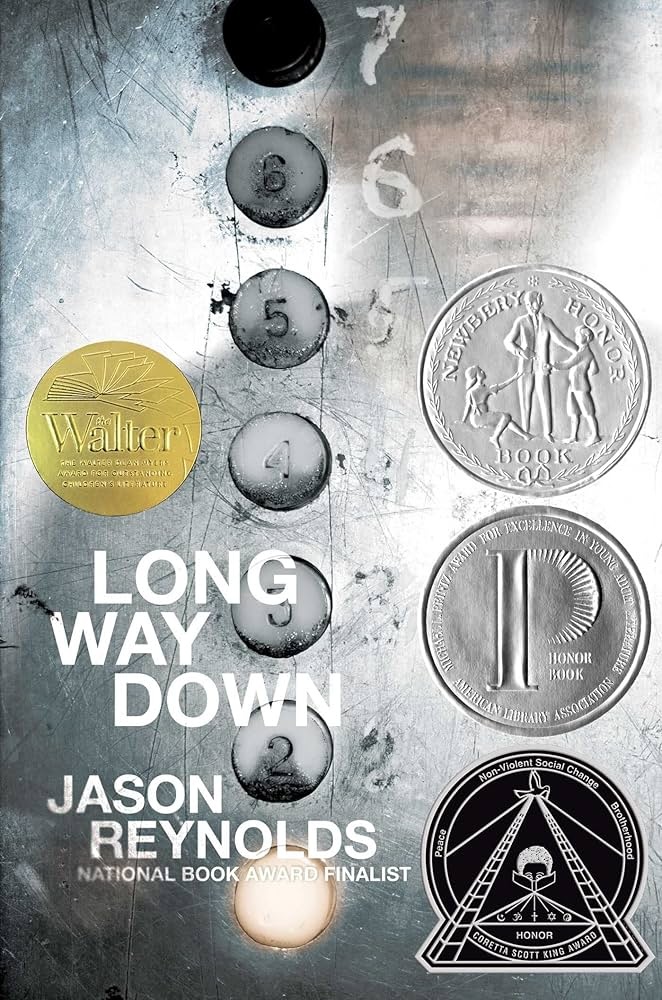 If you’re writing a book for young readers, I suggest reading a lot of books that are already out there, especially books in the genre in which you want to write. Make note of when the book begins and when it ends. I mentioned a year as the outer limit of most books. There are some that take place in much shorter timeframes. One of the shortest is Jason Reynolds’s acclaimed and bestselling Long Way Down, a verse novel that takes place (though with internal monologue and flashbacks) in the time it takes an elevator to get from the top of a building to the ground floor. And when you’re planning or writing your own novel, be sure to have your calendar at your fingertips.