It’s a trope as old as the Bible, the story of Adam, Eve, and the serpent: A person is told they can’t have something. So what do they do? Head straight for the thing they can’t have. Forbidden fruit refers to the apple from the Tree of Knowledge that God warned Adam and Eve not to eat. (The poem “Genesis: Eve” in my novel Eyes Open explores this story and its consequences for my protagonist, Sónia, under Portugal’s Christofascist regime in the 1960s.) In recent years in the U.S., this phenomenon has been called the Streisand Effect, after the singer/actor/director attempted to suppress a photo of her oceanside mansion, leading millions to view the photo that under ten people had seen before the kerfuffle.
The Streisand Effect was in full effect this week after ABC/Disney prohibited comedian Jimmy Kimmel from airing an interview with Democratic Party candidate for the U.S. Senate from Texas James Talarico. This wasn’t the first time an interview with Talarico had been censored off the air. Before CBS canceled his show altogether, “The Late Show” host Stephen Colbert had interviewed Talarico but could not run the interview. At the time, CBS did Trump’s bidding in order to gain approval from the FCC for CBS owner Paramount’s merger with Skydance. More recently, ABC/Disney has faced the threat of having its stations shut down and seized by the government, an action that prompted me to write a protest letter.
Instead, both Colbert and Kimmel uploaded their interviews to YouTube. Today, Colbert’s interview from February has 9.6 million views. Kimmel’s interview a week ago, now has more than 10 million. These numbers exceed those for any of the late-night broadcasts and have drawn in people who would have never stayed up late in the first place. And both are worth watching, though if you only have time for one, I recommend the more recent Kimmel interview. The fact that Talarico now has a Republican opponent, which he didn’t last February, meant that he could define his vision more clearly against that of his opponent, Ken Paxton.
One of the points Talarico made about Paxton had to do with the corruption in Paxton’s many years in office as Texas Attorney General. Talarico said that Paxton increased his wealth by up to 7000% and is now the owner of 15 houses while so many Americans struggle to rent or buy just one.
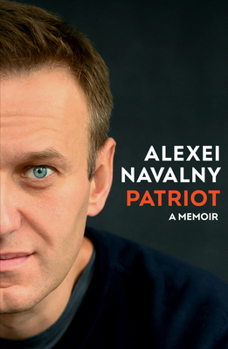 Kimmel’s interview with Talarico was especially timely for me because I am now reading the autobiography of the late Russian anti-corruption activist Alexei Navalny, Patriot. Navalny and his Anti-Corruption Foundation rose to fame in the 2010s by documenting the ways that Vladimir Putin and his chosen oligarchs enriched themselves by stealing from the Russian people. Navalny’s investigators tracked yachts, private planes, and houses and apartments all over the world, and even flew drones overhead to photograph Putin’s mansions. When Navalny started his investigations, he was able to find newspapers and TV outlets that would interview him. Eventually, Putin shut them all down, or they censored themselves. Navalny started his blog to circumvent the media blackout of his work. Then the authorities seized and shut down his blog. By 2015 he was making and uploading videos to YouTube to get the word out, and as he did so, he became more skilled at using video at the same time that audiences were abandoning traditional media and the written word.
The fact that Navalny was banned everywhere meant that he was forbidden fruit, and millions in Russia and all over the world were watching him. Despite the lack of free and fair elections in Russia, Navalny’s electoral tactics were starting to embarrass Putin and undermine his United Russia party. That is why, in August 2020, Putin ordered Navalny poisoned during one of his campaign stops in Siberia (where the party Navalny supported won an unexpected victory in local elections). That is why, in January 2021, upon Navalny’s return to Russia after receiving specialized medical treatment in Germany, Putin ordered Navalny arrested and put on trial for dozens of imagined crimes. And that is why, in February 2024, Putin ordered Navalny poisoned to death while serving his sentence in a bleak “strict regime” prison above the Arctic Circle.
In listening to Talarico, I noticed other similarities between his approach and Navalny’s. Talarico talked about the people he’d met in Texas who didn’t agree with his positions and how he invited them to discuss their concerns with him. In fact, there’s another YouTube video titled “Surrounded,” in which Talarico holds a discussion with 20 undecided voters. Navalny, too, built his support by inviting skeptical Russians to the stage when he was speaking, asking them to share their concerns. Before he was banned from running for office, Navalny built a following via his in-person campaigning, which he could transfer to his blog, his videos, and his work with the Anti-Corruption Foundation.
The universality of this trope points to the fact that seeking out forbidden fruit is human nature. People are wired to be curious about the things they’re told they can’t have. That curiosity is what’s responsible for all of human innovation, because if people only did what those in charge told them, and no more, they wouldn’t explore the boundaries of the known world or create anything new. They would not be able to make decisions on their own, away from whoever they saw as their authorities. (The American Revolution grew in large part out of this situation, as their distance from England and the slowness of transportation and communication led the colonists to improvise and to interpret the king’s rulings as they saw fit.) What Putin has done, and what Trump is attempting to do, is to beat that instinct out of people — to make the punishment for tasting forbidden fruit so harsh that people don’t even try. But just as there are consequences for seeking out what authoritarian rulers (or aggrieved celebrities) have banned, there are consequences for attempting to crush a people’s desire to know the truth.