
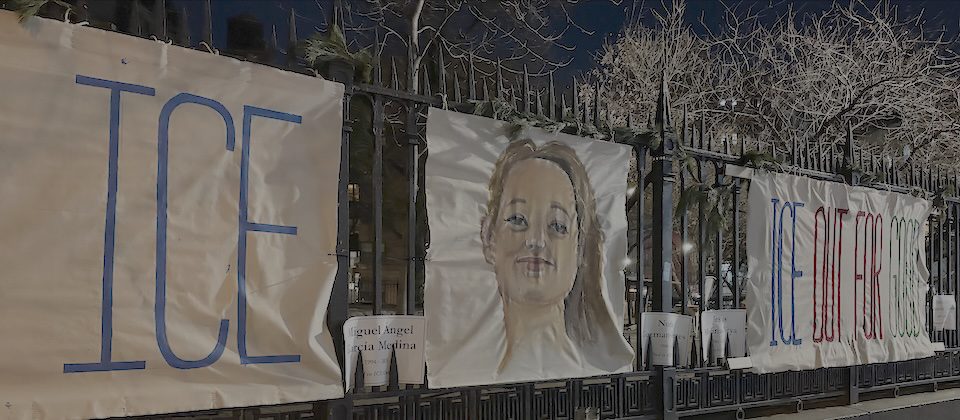
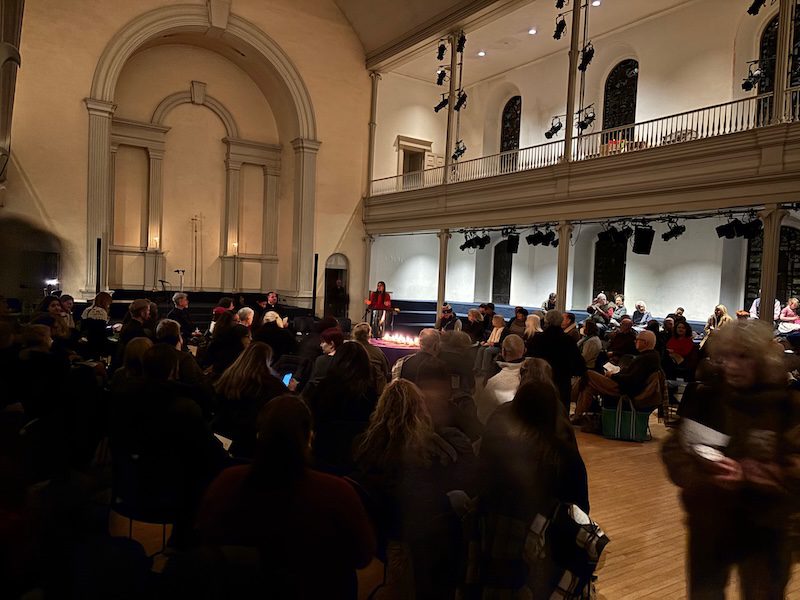
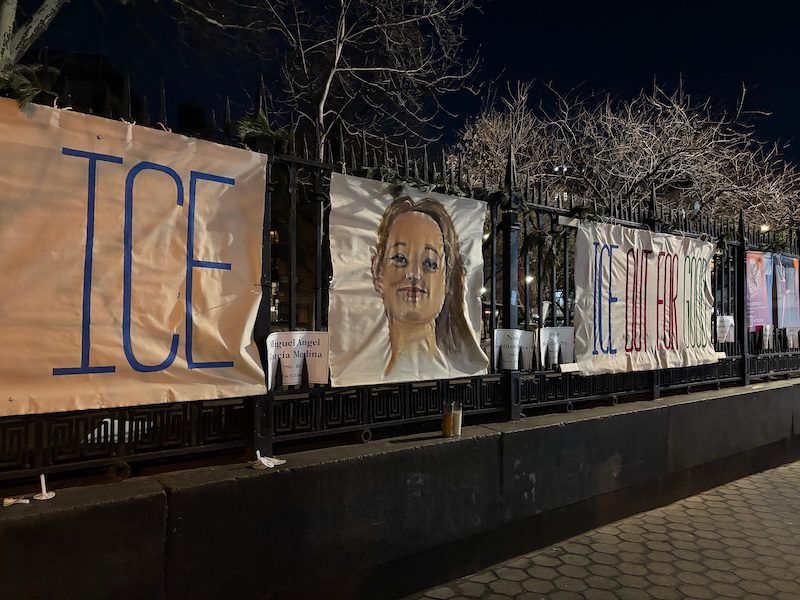
Earlier this week, I attended a vigil at St. Marks Church on the Bowery for Renee Nicole Good, the 37-year-old woman shot and killed in her car by an ICE agent in Minneapolis. Three other congregations co-sponsored the event — Judson Memorial Church, Middle Collegiate Church, and Trinity Lutheran Church Lower East Side. Being Jewish, I often feel uncomfortable in Catholic or other Christian churches, like I’m an observer who doesn’t really belong there. But on Monday evening, I felt as though I belonged.
One of my reasons for attending this event — I also attended a rally in Foley Square the night Good was shot and killed — is that I’m working on a project that explores the role faith institutions played in the fall of communist dictatorships in the 1980s. I’ve already written about the Catholic Church in Poland during the papacy of John Paul II. I’m currently researching the role of the Nikolaikirche, the St. Nicholas Lutheran Church in Leipzig, in hosting the demonstrations that helped to bring down the dictatorship in East Germany.
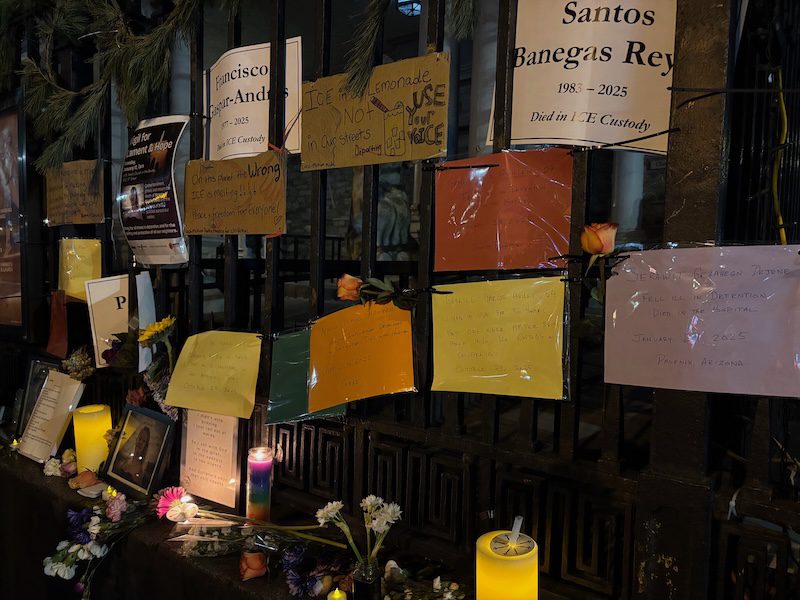
The pastor from Trinity Lutheran Lower East Side, Will Kroeze, spoke at the vigil about the Lutherans during the rule of Adolf Hitler. The denomination included pastors who denounced the Nazis, such as Dietrich Bonhöffer, who died in a concentration camp in 1945 because of his courageous dissent. But it also included pastors who praised Hitler or went along with his atrocities due to cowardice, and people who claimed to be Lutherans as they killed civilians in occupied areas and drove the trains filled with Jewish people to death camps.
The pastor did not mention Christian Führer, known as “the pastor in the denim vest,” whose church became the center of resistance to the East German regime and its fearsome secret police, the Stasi. Born in 1943, Führer started leading Peace Prayers at the Nikolaikirche in 1980, calling for the end of the Cold War. He was motivated to speak out by the young people in his youth group, young people who, like him, had been born under a totalitarian regime, though one of a different ideology. Neither he nor the young people who worshipped in his church despite communist persecution of religious institutions had ever known freedom. Nonetheless, and in the face of the relentless propaganda of a closed society, they imagined a different way of living, one in which there were no mortal enemies on the other side of the wall.
In 1989 the East German regime started cracking down on the Peace Prayers. Stasi agents spied on the church and its congregants and arrested participants in this peaceful resistance. But instead of scaring people away, this act of repression brought new people to the church, people who weren’t even Lutherans. In October, some 1,000 Stasi officers and regular police flooded the church grounds and were met by some 70,000 peaceful marchers, a number that increased to 300,000 in this small city and culminated in the fall of the Berlin Wall and Germany’s reunification.
In later years, Führer would become a critic of capitalism and of the dismantling of Germany’s welfare state following reunification. He authored several books on the topic, and he and the members of the Nikolaikirche are credited with sparking Germany’s only peaceful revolution.
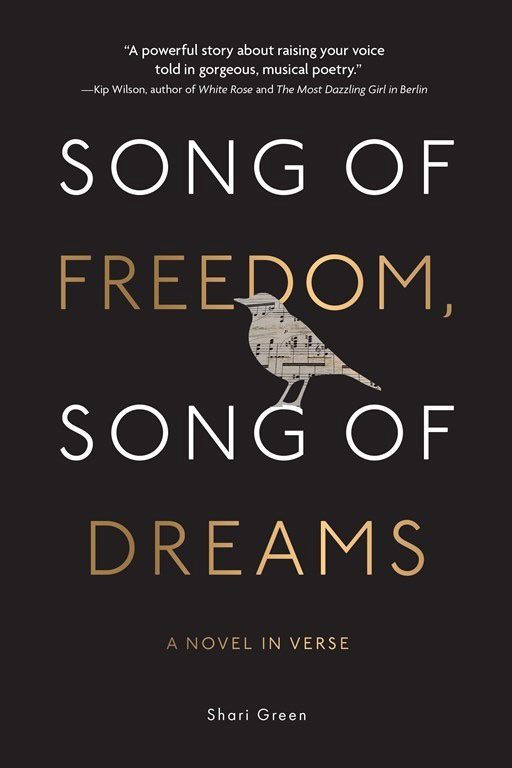 I originally learned about the Nikolaikirche from Shari Green’s young adult historical novel in verse Song of Freedom, Song of Dreams, the story of an aspiring musician who is not religious but shows up at the church to protest the dictatorship after her best friend’s family flees the country. She too considers fleeing — not an easy thing to do in a country with a closed border — but ultimately decides to stay and fight for herself, her community, and a boy she meets along the way.
I, too, appreciated meeting people from my East Village community at the vigil. As the ICE irregular army spreads its terror across the country, it’s important for us to stand together in our neighborhoods, to protect each other, and to take courage from the brave people throughout history who refused to bow down to despots committing atrocities against their own people.
How do you see imagination and hope working as political forces when people live under fear or repression?
That’s a good question. Totalitarian regimes operate by controlling every aspect of life, by controlling the minds of the people so that they’re accepting the most absurd of lies or else going along with the lie in order to protect themselves and their families. Vaclav Havel wrote about “living in truth,” finding ways to subvert the totalitarian machine as a means of preserving one’s dignity and hope for the future and of inspiring others to do the same. An example of “living in truth” is the Ford autoworker forced to attend a Trump photo op at his factory who called out “pedophile protector” during his speech. At that point Trump flipped out, cursed the man, and gave him the middle finger. Yes, the man lost his job, but he maintained his dignity as a free person, and now people have donated money to help him while he’s unemployed. By the way, when Lech Wałesa lost his job at the Gdańsk shipyard in 1976 for organizing against the communist regime in Poland, he also received under-the-table support for his large family from the Catholic Church and other less outspoken supporters.
Pingback: The Dignity of a Free People | Lyn Miller-Lachmann