I’ve had this blog for a long time, long enough that I’m revisiting the theme of a piece I posted over ten years ago titled “The Moment of Disillusionment.” Then, I featured a tee shirt from the Hudson Children’s Festival that featured a smiling whale. Whales became the symbol of Hudson, New York, a small city on the Hudson River 130 miles from New York City, in the nineteenth century when it was a center for processing dead whales. In real life, the whales were not smiling.
Today’s post, though, features the county fair in Guilford, Connecticut. County fairs and state fairs are beloved annual events in which animals and their people compete in a myriad of categories. There are rides, performances, craft booths, and lots and lots of food. When I lived in Madison, Wisconsin, I regularly attended the Wisconsin State Fair near Milwaukee as well as the Minnesota State Fair near St. Paul. Farmers showed off their livestock, and the best ones in various categories fetched the highest prices at auctions conducted at the fairs. Proceeds often went to the young people exhibiting the animals, or to support the 4-H programs in their communities. Some animals would be bred, used for milk or wool, or sent to petting zoos. Others would be slaughtered.
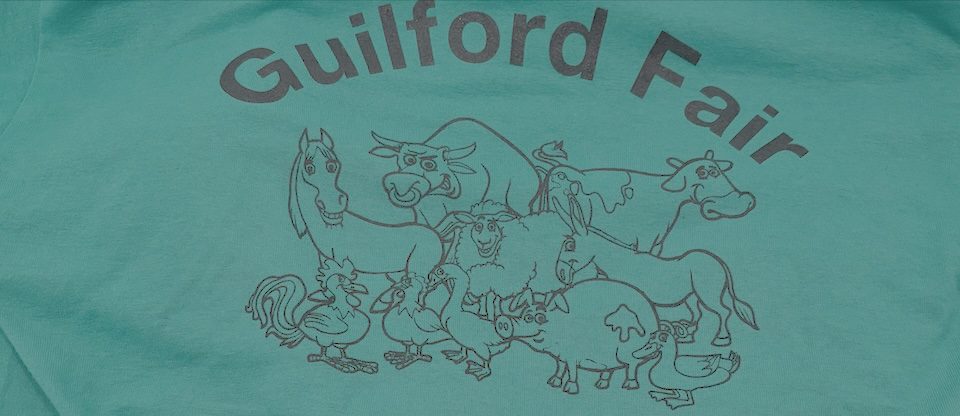
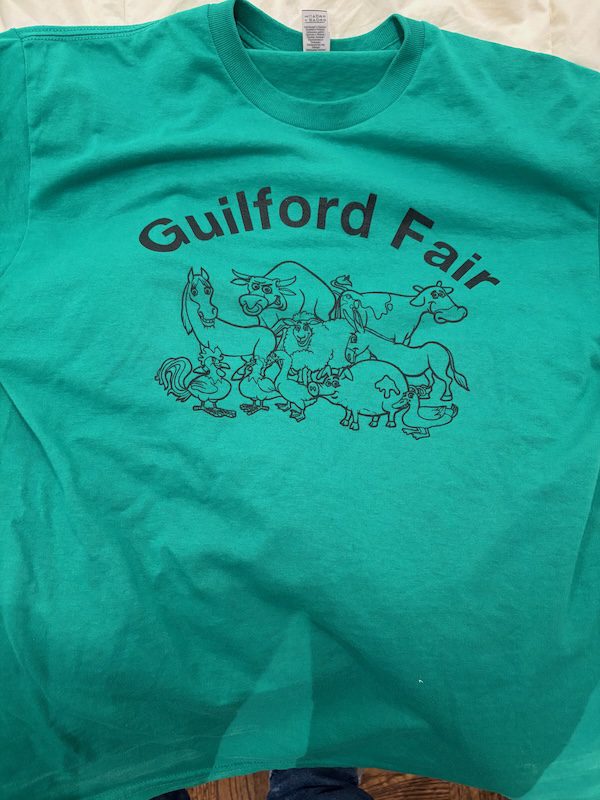
At last year’s fair in Guilford, I bought a tee shirt that once again featured smiling animals — a bull, a horse, a sheep, a donkey, chickens, ducks, and a pig. Maybe they’re excited about all the attention they’re getting, or they’re in a brand new place instead of doing the same old, same old. One critter, a cow, looks rather apprehensive, though. She doesn’t have a good feeling about this situation. Might she know her fate? Will she serve as the Cassandra to warn the others?* Come to think about it, the donkey looks a bit Eeyore-ish too.**
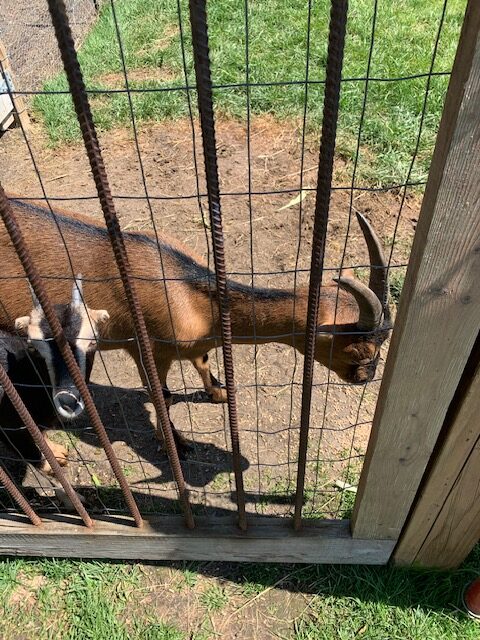
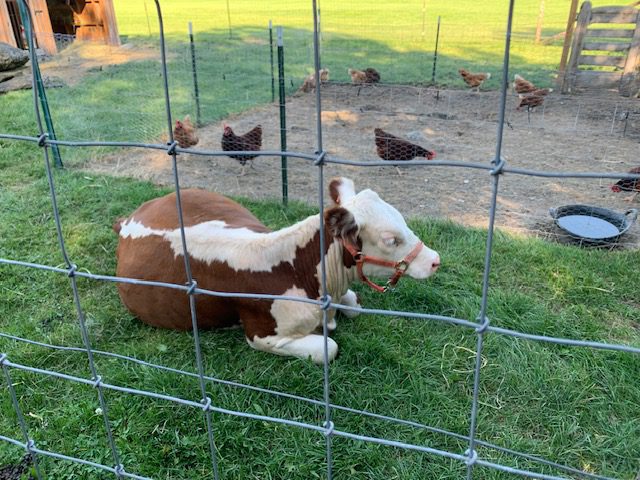
Having researched and written a biography of renowned animal scientist Temple Grandin, I know the dangers of anthropomorphizing animals. In fact, they don’t know their fate, and there’s plenty of evidence that going to a county or state fair is a traumatic experience for most livestock. While they do exhibit curiosity, it competes with fear, because domesticated animals have routines and appearing at a fair is certainly not a routine experience for them.
That said, picture books are full of anthropomorphized animals. Kids enjoy reading about animals and imagining their thoughts, feelings, and choices. They put themselves in the place of animals, and often aspire to the kind of agency that animals in picture books have, as opposed to small children in real life. To the young reader, animals are both childlike and all grown up.
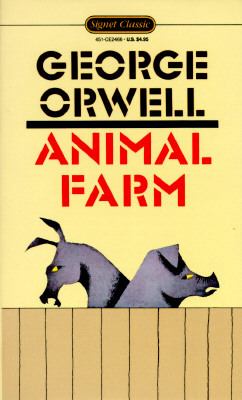
Animals also serve as allegorical figures and metaphors in adult books. Perhaps the best known of these is George Orwell’s Animal Farm, in which the pigs — symbolizing the Russian Bolsheviks — take over Manor Farm, drive out the human farm owner Mr. Jones and his family, and declare that all animals are equal. After revolutionary leader Major (a stand-in for Lenin) dies of old age, Napoleon (based on Stalin) wins a battle for succession, disposes of his rivals, and brainwashes or terrorizes the other animals, finally declaring, “…but some animals are more equal than others.” Animal Farm also features a glum donkey, Benjamin, who warns the others that the beloved old horse Boxer has been sold to the slaughterhouse to buy liquor for the pigs.
 I think a lot of us are feeling a bit like the cow on the tee shirt these days, which is probably not what the artist intended. but you never know. (On closer examination, I think they were trying to make the cow smile, but the mouth is in the wrong place, and she just looks distressed.) One can issue warnings or dissents out loud, but creative people throughout history have also done so in subtle ways, using allegory, symbols, metaphors, and oblique references. Kind of like a journalist who used animals to denounce a failed utopia that turned into one of the cruelest and deadliest dystopias of the last century.
* In Greek mythology, Cassandra was a Trojan princess who could see the future, but cursed by the fact that no one believed her warnings so bad things happened anyway.
** Eeyore is the grumpy, pessimistic donkey in the Winnie the Pooh books by A.A. Milne.