
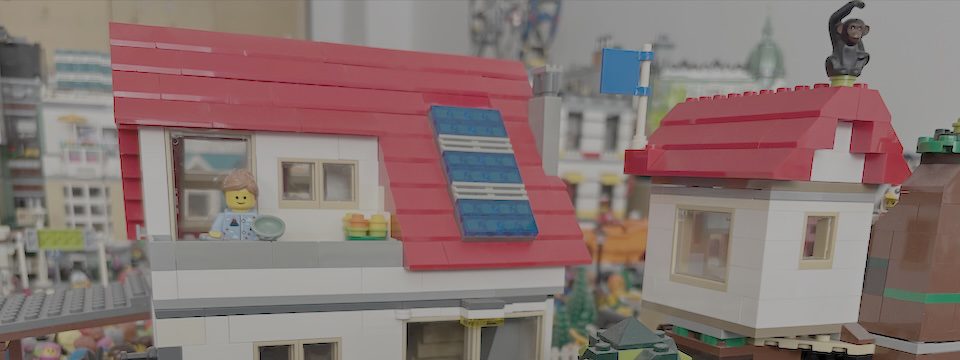
If you’ve noticed a sharp falloff in blog posts, you’re right. I’ve been busy this month teaching various workshops. My last one is this Wednesday, July 23 at 6:30 pm ET, when I will be speaking about the connections between my translation work and my own writing, including how translating Three Balls of Wool (Can Change the World) inspired my writing of Torch. There’s still time to register for this free online event, sponsored by USBBY, the U.S. chapter of the International Board of Books for Young People, and ILA, the International Literacy Association. If you can’t make it to the live event, register anyway, because a recording will be available.
For one of my other classes, I’ve been reading manuscripts, sending letters with developmental edits, and meeting one-on-one with my students. Although my lecture focused on point of view, with a link in the chat to the tragic tale of Lego Piggy, a theme that’s come up a lot this year is scene structure. As a result, I thought I’d talk about scenes, again with reference to my Lego building.
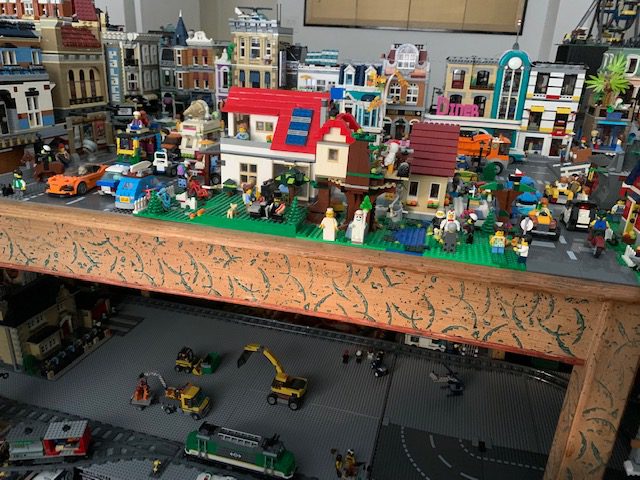
When people see my online presentations or meet with me, they always comment on the Lego town in the background. But like my finished novels, the finished buildings in my town are composed of individual parts, in this case bricks, plates, tiles, and other assorted pieces that have to be fitted together into the whole. The success of the building, or the story, is how seamlessly those pieces fit together and how naturally they look in the end.
A novel is a collection of scenes, arranged in an order that develops characters and the relationships among them, builds suspense, and establishes a character arc that moves protagonists to an entirely different place (often physically but always emotionally) from where they were at the beginning of the story. That overall shape of the story is known as structure. While there can be a variety of structures — a popular one in western storytelling is the Hero’s Journey described by Joseph Campbell, but others include the Three-Act-Structure, Freytag’s Pyramid, and the Heroine’s Journey — all of them assume a beginning in the protagonist’s ordinary world, an inciting incident that causes the protagonist to take action, various turning points in which the tensions and stakes increase, a climax, and a resolution. The protagonist’s desires, needs, beliefs, and misbeliefs are what drive the action and shape each story.
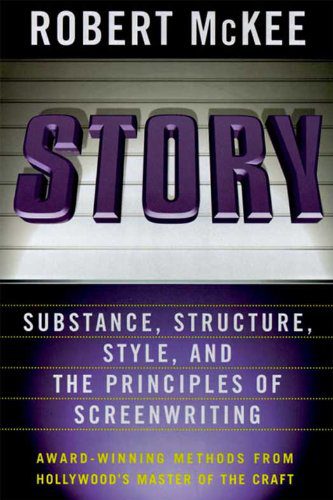
Many years ago, when I still had a car and drove from upstate New York to Vermont regularly, I listened to the audiobook of Robert McKee’s Story: Substance, Structure, Style, and the Principles of Screenwriting, designed for screenwriters but quite relevant to writing novels, particularly in his analysis of scene structure. Through analyses of classic film scenes, he drove home the point that scenes needed the same structure as the work as a whole. First of all the scene cannot be described; it has to be dramatized. That’s what’s meant by the adage, “show, don’t tell.” Next, every scene also needs a beginning in the protagonist’s present world, an inciting incident that leads to the protagonist’s action, various turning points in which the tensions and stakes increase, a climax, and a resolution. Again, the protagonist has to enter the scene with a desire and plan for action, which seems pretty straightforward until the protagonist runs into the antagonist — which may be a person, a system, or a force of nature, basically anything that keeps protagonists from getting what they want. And like the novel as a whole, each scene needs stakes — what happens to protagonists who don’t get what they want or who discover that what they want, and get, turns out to be not what they need. The stakes point to consequences, in which at the end of the scene, the protagonist is at a very different place from the beginning. Maybe closer to the goal, having moved from a place of despair or need to a place of optimism or fulfillment. Or maybe further away from the goal because things went very, very wrong in that scene.
 Every scene in a novel also needs a sequel, which is one of the ways that novels differ from films. The sequel is the resolution of a scene, but a novel extends it further because the protagonist reflects on what happened and resolves a new course of action. Unless a film has a voice-over or other technique, this sequel is harder to show, and it’s why novels typically have more interiority than films. If anyone has seen a movie and then read the novel from which that movie was adapted, the difference quickly becomes evident. (I recommend seeing the film Spoor and reading Nobel laureate Olga Tokarczuk’s Drive Your Plow Over the Bones of the Dead for a clear illustration of this difference, keeping in mind that Tokarczuk co-wrote the screenplay adaptation with director Agnieszka Holland, so it wasn’t a matter of an action-oriented director altering the original work without the author’s consent.) A novel that tilts too much toward scene means that readers go on a ride at a breakneck speed, not understanding the meaning of that scene for the main character. And interiority, understanding what a protagonist is going through, is key to readers caring about and connecting with that protagonist. Tipping the balance in the other direction toward sequel rather than scene leads to a “too quiet” novel that’s “too much in the protagonist’s head.” Things have to actually happen for the protagonist to change, to suffer or celebrate, and to make decisions. Action and conflict cannot be skipped, glossed over, or summarized.
I’ll leave you with a scene checklist, to make sure you have a legitimate scene where you need it, and that scene is working for your main character and overall story:
Is the scene dramatized, or merely described? You don’t have to turn everything into a scene, but if this is a significant moment for the protagonist, with stakes and a change in the character’s situation, it needs to be in scene.
Does the scene have a clear structure, with beginning, middle, and end? Does it leave the protagonist in a different place?
Entering the scene, does the protagonist have a desire or goal? Who or what is the antagonist in that scene keeping the protagonist from achieving the goal? What are the stakes, if the protagonist doesn’t achieve the goal?
Are the protagonist’s actions and decisions driving the scene? Sometimes it’s unavoidable (as in eavesdropping scenes, in which the protagonist acquires significant information), but the protagonist shouldn’t be a witness to other characters carrying out the significant action. And do look for alternatives to the overdone eavesdropping scene.
Is there a balance between scene and sequel? And do the protagonist’s reflections in the sequel show both sufficient interiority to connect the readers to the character and strong enough resolve for further action to enhance the stakes and tension?
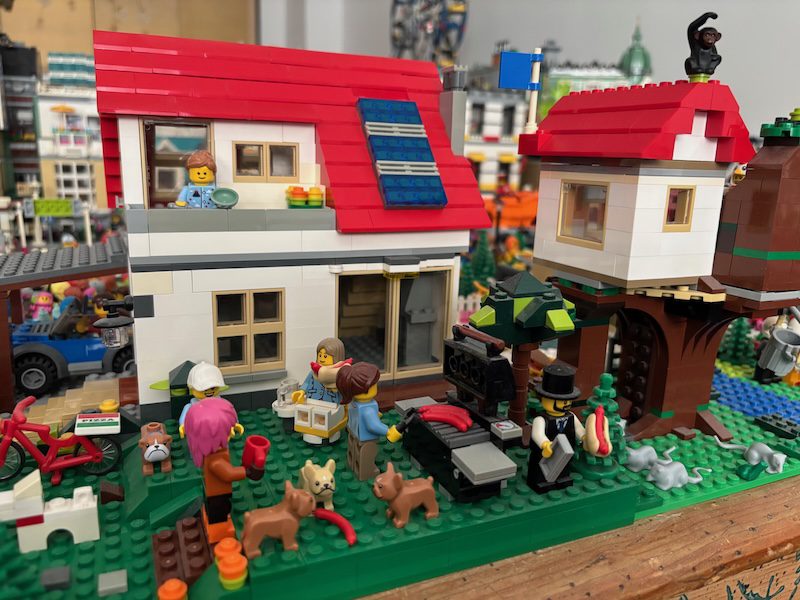
Please feel free to ask questions or contribute your own thoughts. I will say that some people use color coded note cards or spreadsheets to keep track of these scene-level questions and to connect them to the overall plot and subplots. Others just use slips of scrap paper or napkins, torn up with scrawled notes and piled up on the desk. Whatever works for you!



Fascinating. Will check this out in relation to The White Tiger.
I remember your drive to and from Vermont! 😊😊
Thanks for this great checklist! I’m glad I have something to refer to. I had to critique some sample chapters of a manuscript last week. I could have used this advice!
You’ll have it for next time! Thank you for reading and for your comment!