A year and a half ago, my building in New York City began collecting food waste for composting, as a result of a new law that went into effect with fines for noncompliance. One of my neighbors had already been composting, using a bin across the street from our building, but the practice became a lot more convenient once the huge rodent-proof brown bin was placed on the ground floor next to the service elevator. With advice from the neighbor, I began collecting food scraps, coffee grounds, and dead leaves of houseplants as soon as the bin appeared, placing them in a recycled yogurt container that I switched out for a fresh container every other week.
My son and his family, who live upstairs, have struggled to comply with the new directive. When I join them for lunch or dinner, I make sure to take their food waste downstairs and add it to mine. But I’m not there often enough to make a difference.
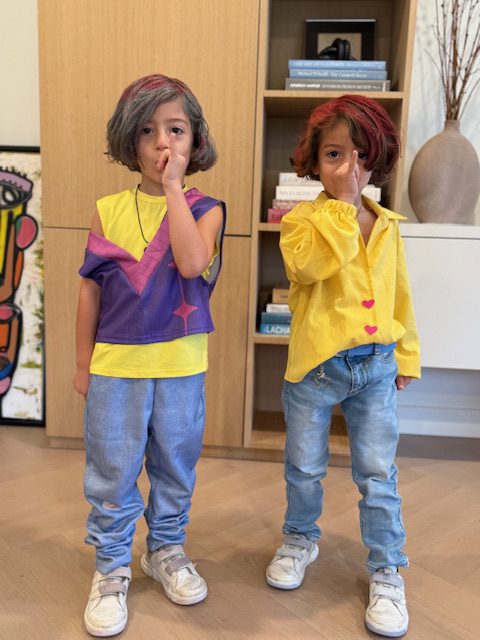
Jonah and Reed, who were once tiny babies, are now five years old and in kindergarten. I’ve been providing child care more often recently, and earlier this week, I had an idea, prompted by the latest stack of picture books I brought upstairs to them. One of those books is The Topsy-Turvy Bus, written by Anita Fitch Pazner and illustrated by Carolina Farías. The story features two Jewish children, Maddy and Jake, who are upset at the pollution around them and warnings of global climate change. They want to do something, but they don’t know what they, as two kids, can do. Enter the Topsy-Turvy Bus, a strange-looking vehicle that runs on biofuel. When Maddy and Jake climb aboard, their first stop is a restaurant, where they help to collect the used cooking oil that the bus uses in the place of gasoline. From there, they visit an organic farm and learn how the farmer grows produce without chemical fertilizer or pesticides. And where does that farm’s fertilizer come from? The apple cores that the kids don’t eat end up at the composting facility, which is the third stop. The children learn that worms eat the food waste and their poop makes fertilized soil. It’s the best kind of soil! The kids find out that people are working hard to save the earth, and they too can contribute to that effort.
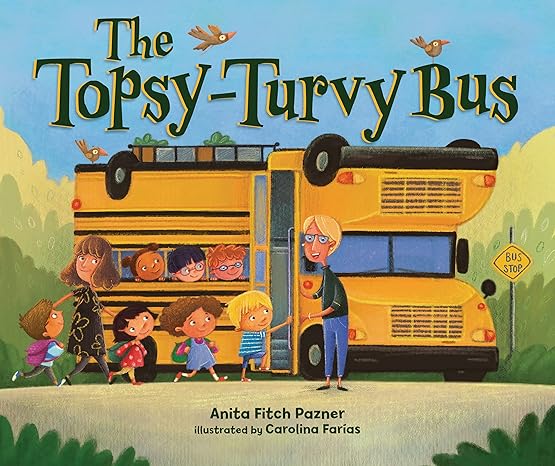 Jonah and Reed were immediately drawn to the story. First of all, they have an Aunt Maddy. They also couldn’t believe that the Topsy-Turvy bus is a real bus. It is! There are two of them in the U.S., one of which is owned and operated by Hazon, a Jewish organization dedicated to environmental sustainability and combatting food insecurity. When I taught seventh grade in the Sunday school program at Congregation Gates of Heaven in Schenectady, our class raised money for the organization. Finally, the book has the word “poop”, twice. It’s their favorite word. They can even spell it out. I explained to them that their Aunt Maddy and soon-to-be Uncle Michael use soil from composting in their roof garden and in the 6th and B Garden on their corner. We all enjoyed the tomatoes that Maddy and Michael grew and know that their high-quality soil contributed to their deliciousness.
I then told Jonah and Reed that their parents have been very busy taking care of them and haven’t had the time to collect food scraps and take them to the big brown bin on the ground floor. I showed them how to collect the waste and last night brought them their own collection bin. Tonight I’ll take them downstairs to throw their scraps into the big bin. This way, they can feel that they’re doing something to help the environment and help their aunt and uncle with their garden.