Twelve years ago, I signed up to be a first round judge for the CYBILS award, given by book bloggers to outstanding children’s and YA books in a variety of categories. I was assigned to graphic novels even though I had zero experience with the medium outside of reading and trading comic books at summer camp many decades earlier. At that time, a lot of people looked down on graphic novels. They weren’t real books and reading them wasn’t really reading, many educators said. I suspected that I ended up on the graphic novel jury because I was a first timer given the least popular assignment.
I struggled with the format. I wasn’t used to the arrangement of the panels and the conventions of different types of graphic novel formats, particularly manga and anime. But I did my job to the best of my ability and the following year moved on to my first choice jury, YA fiction.
I first began to appreciate graphic novels because of my work as a translator. When the picture book The President of the Jungle came out, I spoke on a panel for the Brooklyn Book Festival about translating books with dominant visual elements. One of my co-panelists was Sandra Smith, who had translated a graphic novel edition of Albert Camus’s The Stranger. She talked about the art of translating the graphic novel, including the need for brevity in the translated text to make sure it fit into the text boxes. Her advice was quite helpful when Levine Querido approached me to translate Pardalita, which is a hybrid of a graphic novel and a verse novel. And when I translated Pardalita, I came to understand the format of that graphic and realized that I really like them.
Reading a graphic novel is a different process from reading a prose novel, just as reading a verse novel is different from reading a prose novel. The graphic novel is immersive in a different way from the prose novel. With a prose novel, I’m developing a picture in my mind from the words. With a graphic novel, I use the pictures to expand on the words in the text. Instead of visualizing it, I’m writing the story in my mind.
Between 2013 and today, the universe of graphic novels has expanded, and the quality of the art and production has also improved as more are published. I think a lot of educators are coming to appreciate the format and to see the novels as “real reading.” Graphic novels accommodate the needs and interests of a wider variety of students, and they are artistic, literary, and profound.
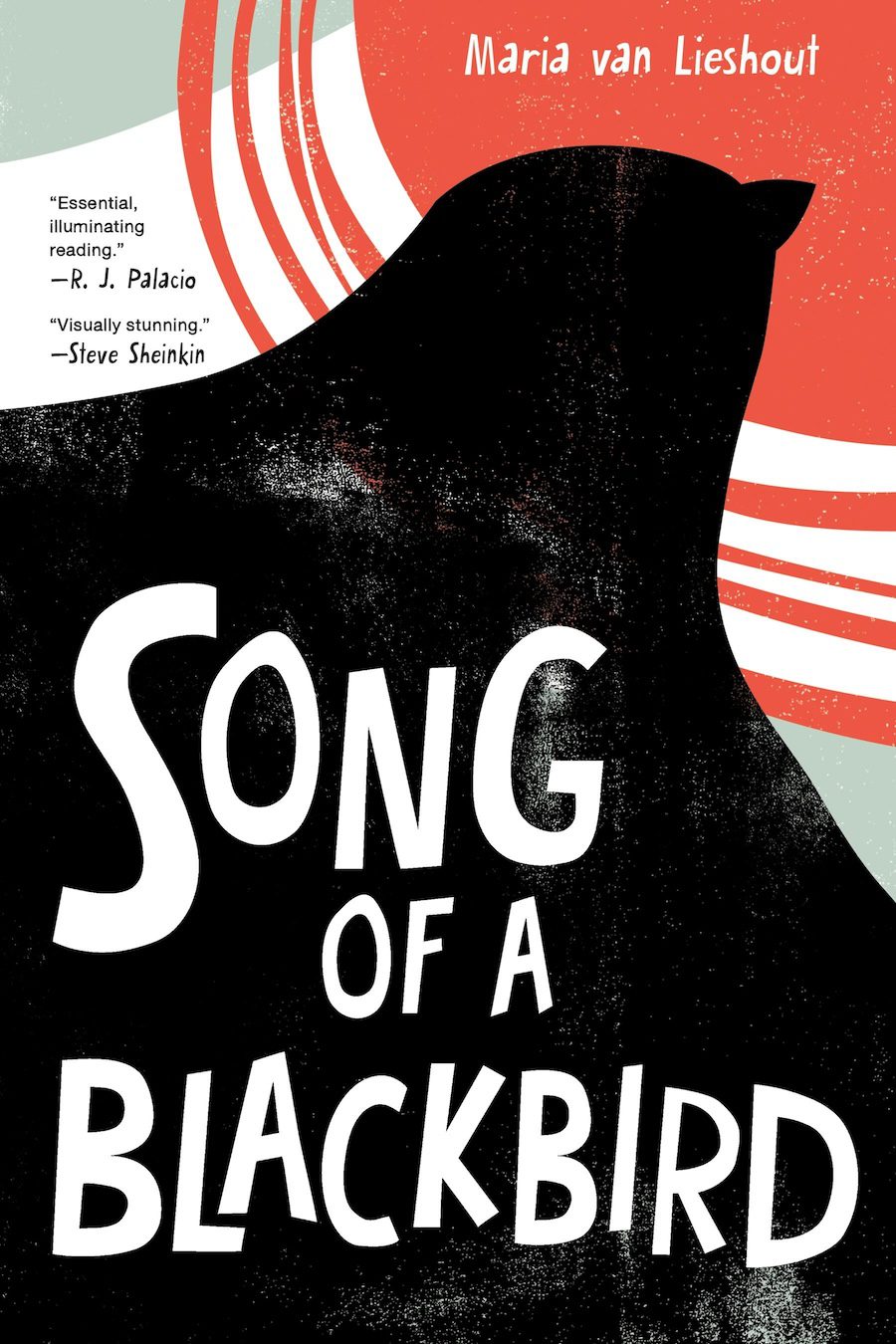 Over the past several years, I’ve had the privilege to read and review a large number of graphic novels. One of my favorite reads from last year was Maria van Lieshout’s Song of a Blackbird, which I reviewed for #WorldKidLit Wednesday. It’s a dual timeline story in which a teenager looking for a match for her beloved grandmother’s bone marrow transplant discovers that her grandmother was a Jewish child hidden from the Nazis in Amsterdam — and her brother, who she believed was dead, was still alive in the city. The second timeline follows the fate of the young brother and sister, who were saved in part by a courageous teenager who’d joined the Resistance and was smuggling children to attic hiding places and Catholic convents. These two stories are narrated by a blackbird, who observes the worst and the best that humans can do.
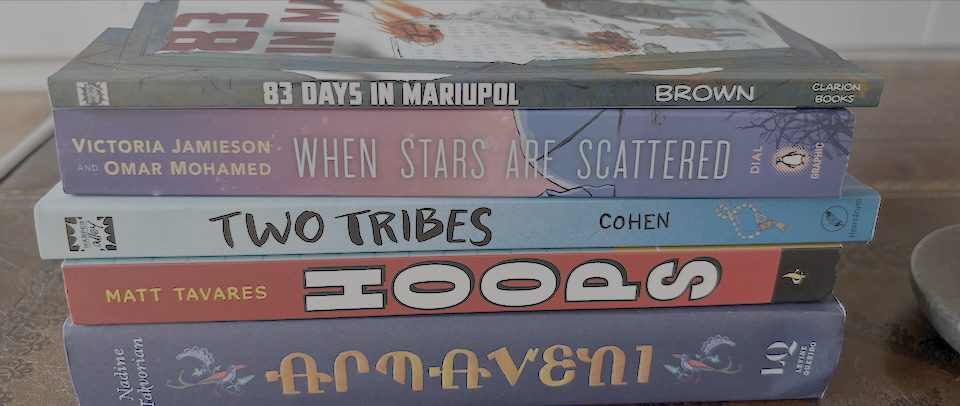
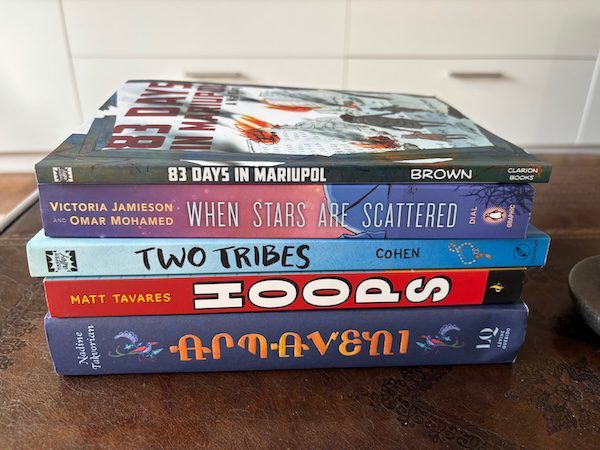
More recently, I reviewed, also for #WorldKidLit Wednesday, Don Brown’s 83 Days in Mariupol: A War Diary. His graphic novel uses the testimonies of survivors of the nearly three-month siege of the city of 560,000 people that the Russians bombed to rubble in the first months of their invasion of Ukraine. My review coincided with the fourth anniversary of Russia’s genocidal war, and with the U.S. and Israeli bombing of Iran, an event that threatens to push the struggle and resistance of the Ukrainian people from the news at the same time as it raises the price of Russian oil — a gift to the Putin regime.
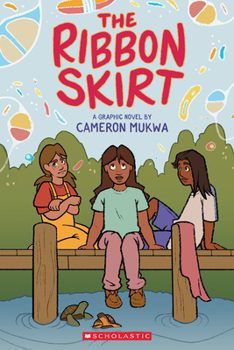 I’ve also worked on various curriculum projects, and I’m happy to see graphic novels incorporated into literature and social studies units. Some of the graphic novels that are proving valuable for classroom use — and are popular and compelling reads — are When Stars Are Scattered by Somali refugee Omar Mohamed and author/illustrator Victoria Jamieson; two-spirit Anishinaabe author/illustrator Cameron Mukwa’s The Ribbon Skirt; and Matt Tavares’s Hoops, about a girls’ basketball team fighting for equality for women’s sports at the dawn of Title IX.
The next read on my TBR list is Nadine Takvorian’s Armaveni, a graphic novel about an Armenian American teenager’s journey to find the truth about her family Armenian Genocide a century ago. I will be reviewing this one for #WorldKidLit Wednesday in April and will insert the link as soon as the review goes live.
Please comment on any graphic novels that you’ve read recently and recommend. Happy reading!
Pingback: Graphic Novels for Kids at the 2026 PEN World Voices Festival | Lyn Miller-Lachmann