
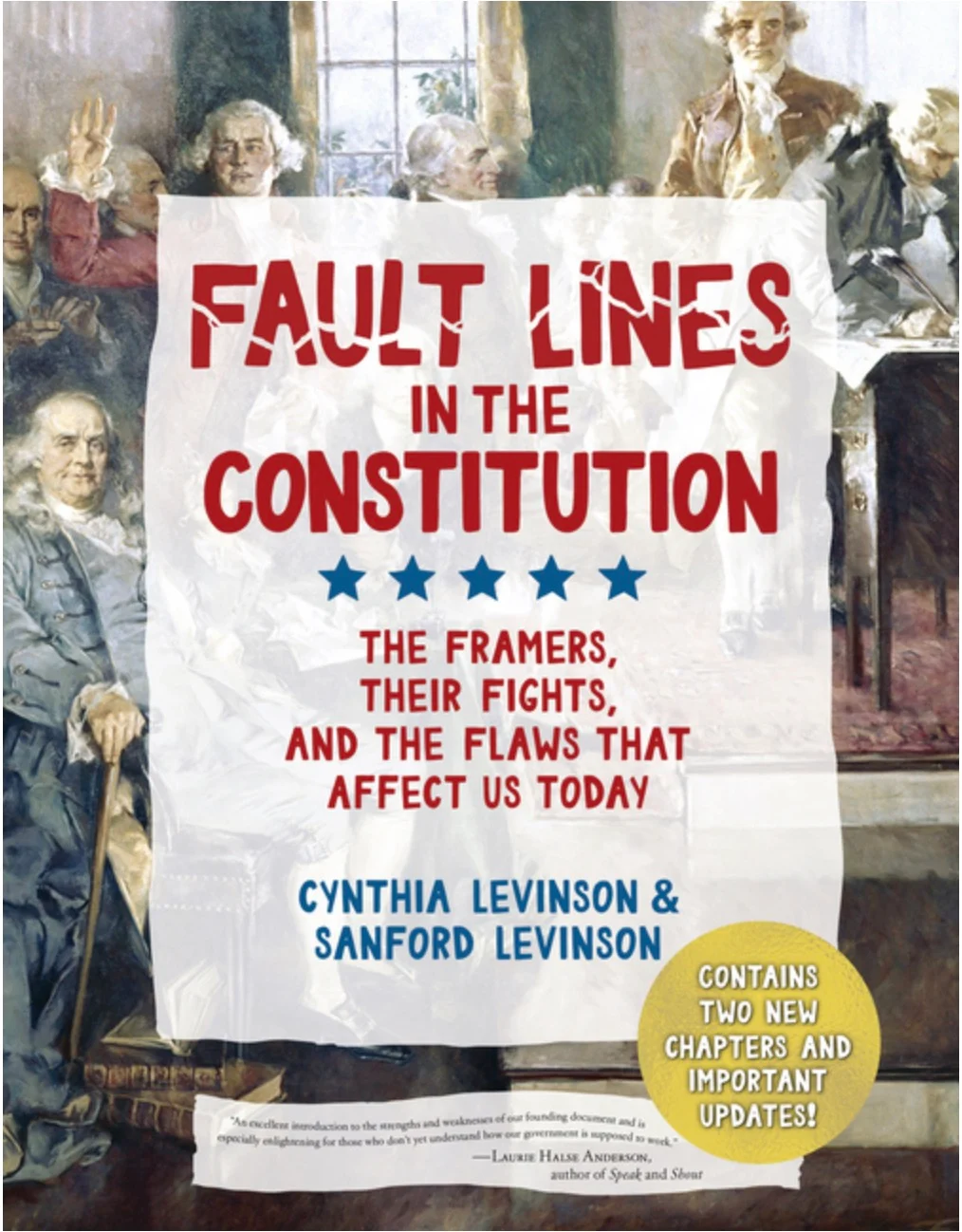
Several weeks ago, my friend Cynthia Levinson wrote a blog post to discuss the third edition of her acclaimed book for young readers Fault Lines in the Constitution. Along with revised chapters, the new edition features additional chapters on Impeachment and Secession. She also changed the “grade” of the 236-year old foundational document from a C to “barely scraping by with a C-” for reasons she explores in the third edition.
 I submitted a comment to her post, but like many attempts at comments on blogs, it failed to post and immediately vanished into cyberspace. However, I also realized that maybe my comment needed a full post of its own.
I began by saying the C- that she bestowed was an example of grade inflation, a teacher’s effort at generosity or an expression of hope that the work can’t be as problematic as it really is. No insult to the Founding Fathers; while they had the example of mad King George III in recent memory, they could not have anticipated so much of our current situation. And maybe a country that descended into a bloody civil war in 1861 and is on the cusp of another one 164 years later is too big and too fractious to exist in its current form. (I have a theory about large countries and how they devalue life, but that’s the subject of a future blog post.) But, yes, I would argue that the Constitution is at best on life support with a D grade and may well have already failed. After all, Federal troops moved into Los Angeles earlier this year and are currently occupying Washington, DC, with threats to invade and occupy other cities in states that predominantly vote Democratic.
When the Civil War ended with the surrender of the Confederacy, Federal troops occupied the 13 Confederate states. They ensured that Constitutional amendments — the 13th, 14th, and 15th Amendments ending slavery and giving citizenship and the right to vote to Black Americans — and associated laws would be enforced. Federal military occupation was the consequence of the South losing a war, and the Posse Comitatus Act of 1878, passed after the end of Reconstruction, restricted the use of the U.S. military for domestic law enforcement. Exceptions were carved out if Congress authorized the military intervention or in the case of an actual insurrection, as defined by the Insurrection Act of 1807.
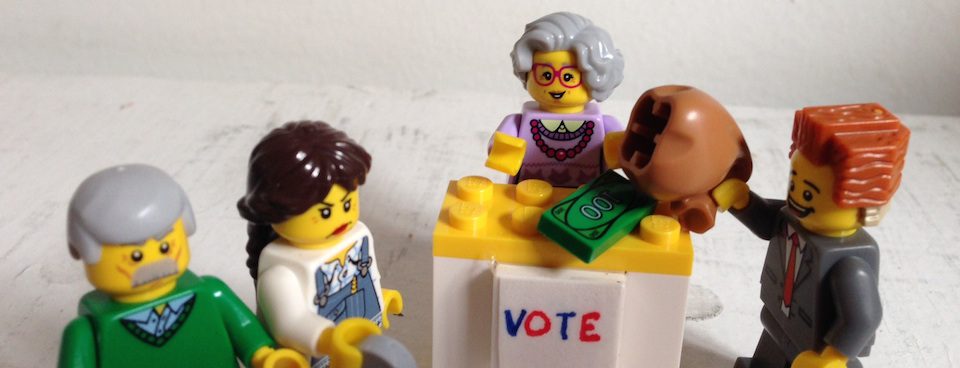
 The current military occupations of U.S. cities is not due to those states and cities losing a war, but the opposition party they supported losing an election. Nothing in the Constitution permits the President to overturn the results of an election or to punish voters who supported the losing political party by occupying their cities and sidelining their local and state governments. But here we are, and our vaunted Constitution is powerless to stop it. Hence, the failing grade.
I don’t know how the country can recover. Once broken, or replaced by the 900-page Project 2025 document establishing a white-dominated Christian nationalist government, can the Constitution be restored in its entirety, similar to those disaster recovery companies who advertise they’ll restore your home “like it [the disaster] never even happened”? (Maybe I should get ServPro to sponsor this blog.) My comment on Cynthia’s blog post acknowledged the failure of the Constitution and suggested some drastic rethinking as the basis of a new constitution, one to consider if the country splits up the way the former Soviet Union did in the 1990s.
Overall, I believe that any brand-new constitution should consider a parliamentary system, which dominates in democratic countries today. The U.K. and Canada are examples of parliamentary systems. In a parliamentary system, the titular head of state — a monarch or president who carries out mostly ceremonial duties — asks the party with the largest share of votes to form the government. Most of the time, that party doesn’t have a majority and must form a coalition with smaller parties, which gives smaller parties a voice in the government. A multi-party parliamentary system can also lead to instability because the smaller parties can threaten to pull out of the coalition and bring the government down, prompting new elections. Most of the time, a government’s collapse is not a good thing but it can have many positive consequences. Smaller parties can more easily bring down a government that betrays its supporters, or proves itself incompetent, corrupt, or dangerous. It also keeps the dominant party honest.
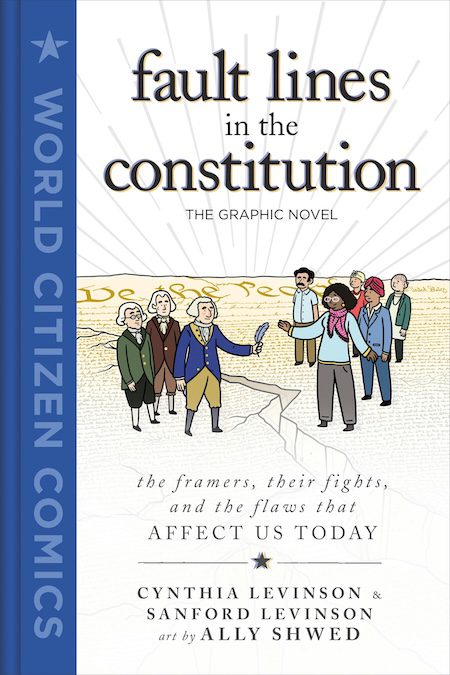
Whether or not there’s a parliamentary system or a presidential one, with separation of powers between the executive and legislative branches, I mentioned other reforms in my comment on Cynthia’s blog. Fault Lines in the Constitution talks a lot about gerrymandering — a topic now in the news because Texas has engaged in mid-decade redistricting to turn five districts from predominantly Democratic voters (or closely tied) to predominantly Republican voters, causing California to retaliate. Essentially, these states have legislators choosing their voters, when it’s supposed to be the other way around. The best situation for creating districts in which legislators are forced to listen to and serve their constituents is to have independent redistricting commissions made up of judges, political scientists, economists, and urban planners who can create districts where the residents are actually neighbors rather than distant strangers thrown together in carefully calculated ways to serve politicians’ political ambitions and ideologies.
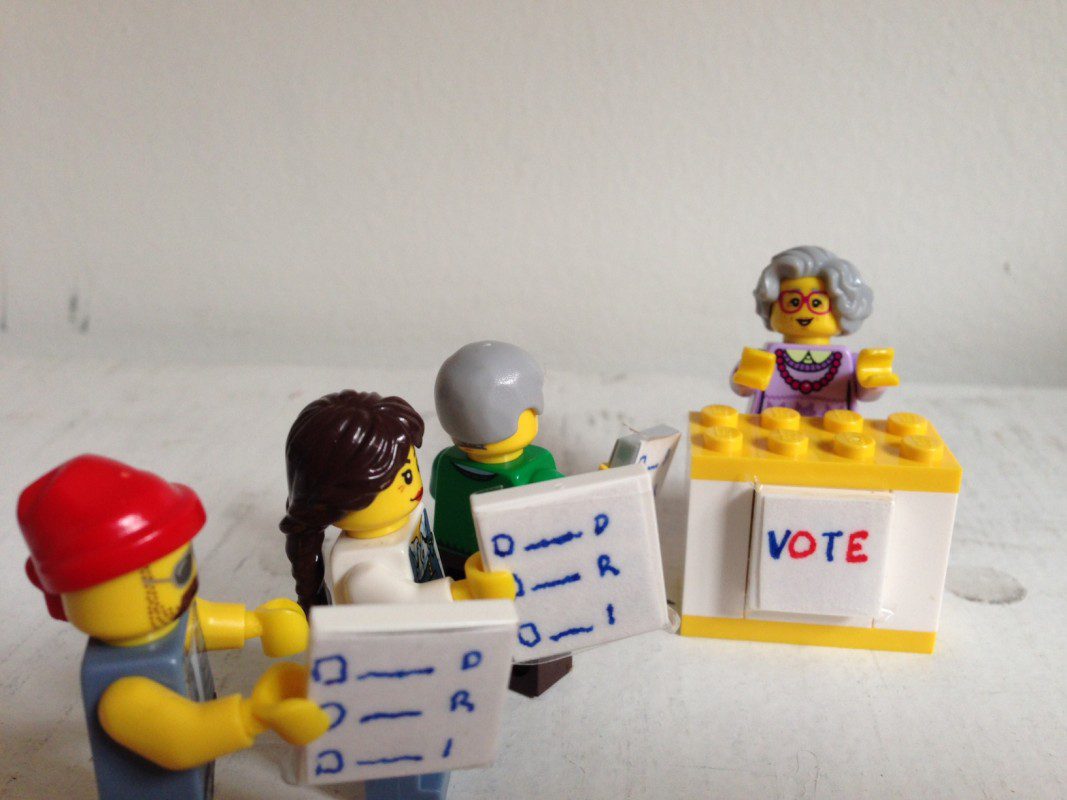
A related suggestion is to have larger multimember districts and proportional representation. This gives electoral minorities access to a legislator sympathetic to their interests and dedicated to providing constituent services to them. I’ve been in a situation in which my elected representative’s office denied my request for information because I was registered with the other party. (In that case, he was in a divided district and lost his reelection bid a few years later, but I was on a short deadline and had to get help from a co-author with a different Congressional representative.) And people like to know they’re being listened to and heard, whether or not the legislator can do anything about their concerns. It certainly beats the smug legislator violently removing said constituents from town halls because he doesn’t like what they have to say.
Finally, it should be easier to remove an elected leader who turns out to be a despot, traitor, thief, or all of the above, and call a new election. A parliamentary system with a coalition government offers the easiest avenue for action in case the voters soon realize they’ve made a terrible mistake. Or if they have been duped by a candidate who denied he’d do something unpopular (like replace the Constitution with Project 2025, which had the support of 4% of the voters before the election). But there are other alternatives, such as a mostly ceremonial president who can force a prime minister’s resignation or dismiss the government in an emergency and call snap elections.
There’s more I can say about constitutional reform, including restrictions on political donations that have turned into bribes and politicians into auctioneers. I look forward to the publication of the third edition of Fault Lines in the Constitution and hope our dialogue continues.



This is a fascinating, thorough, and thoroughly thoughtful post, Lyn. Thank you for your comments and for boosting our blog (which I must troubleshoot!).
Pingback: Large Countries and the Value of Life | Lyn Miller-Lachmann