
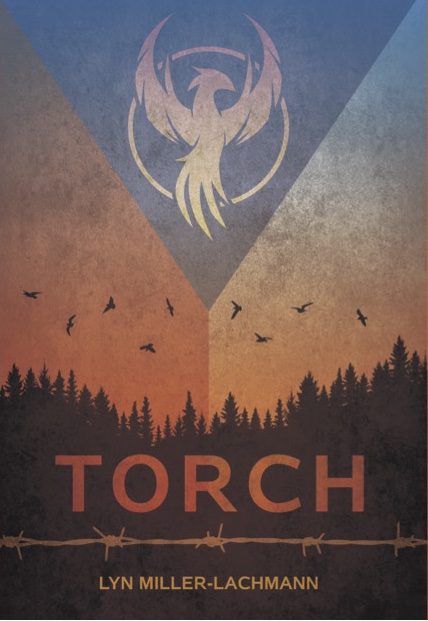
When I was researching Torch — the story of three misfit teenagers in the crosshairs of the Czechoslovak secret police in 1969 after their mutual best friend sets himself on fire to protest the Soviet invasion and occupation of their country — I came across a startling quote. The novel is based on the fatal protests of two real young people, Jan Palach and Jan Zajíc. After Palach’s death in January 1969 and an officially-sanctioned funeral procession that drew more than 100,000 mourners, the rector of his university issued a statement that I quote in Torch, an attempt to dissuade others from following the young activist’s path:
We need the strength, the hearts, the minds, the arms of all of you. Our country is small, and we cannot afford to lose a single man, a single woman…
 At the same time the Soviets marched into Czechoslovakia, the United States was embroiled in a war in Southeast Asia. My father supported the war in order to stop the spread of Communism, and he justified the high casualties among the Vietnamese people by saying, “They don’t value life the way we do.” Protestors against the war decried the costs among both Vietnamese people and American troops, and the American public eventually turned against the war, but not until 58,000 U.S. troops and from one to three million Vietnamese, Cambodians, and Laotians lost their lives.
At the time of his death, my husband, Richard Lachmann, was working on a book about war casualties in different countries, arguing that the public’s willingness to sacrifice the lives of its citizens for abstract principles and land conquest had diminished to the point that such wars were no longer possible. As examples, he used the Vietnam War, the Soviet invasion of Afghanistan, and Israel’s wars in Lebanon and against the Palestinians. Events since Richard’s death, beginning with Russia’s costly invasion of Ukraine six months later, have unfortunately proven his thesis wrong. Since then, the world, and especially some of the larger countries within it, seem to be spiraling toward ever greater violence and mass death.
Several weeks ago in a post about the possible failure of the U.S. Constitution, I promised one on whether large countries are more likely to devalue the life of their citizenry than smaller ones. The university rector’s quote, his idea that a small country cannot afford to lose the talents of its people, motivated my thinking. Are leaders of a large country more likely to see its people as expendable?
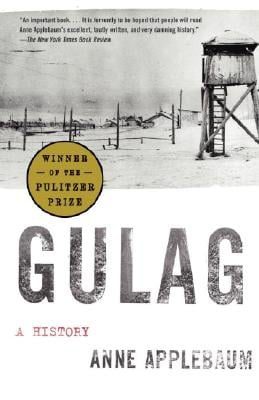
We have examples from two of the largest countries in the twentieth century — the Soviet Union and China. Stalin’s regime in the Soviet Union murdered from 700,000 to 1.2 million people in purges of political enemies during the Great Terror of the 1930s, including military leaders whose death left the USSR unprepared for Hitler’s invasion in June 1941. Even before the Great Terror, his implementation of forced collectivization between 1930 and 1933 resulted in the starvation of up to 10 million people, including the four million Ukrainians estimated to have died during the Holodomor. A similar terror-famine led to the deaths of from 1.5 to 2.3 million people in Kazakhstan. Mao Zedong’s takeover of China in 1949 led to a similar move toward collectivization and the bizarre agricultural policies of the Great Leap Forward. An estimated 30 million Chinese people died from starvation between 1959 and 1962 as a result, making this man-made event the deadliest famine in human history. Nonetheless, the perceived overpopulation of China led to the implementation of the one-child policy two decades later.
Why might large countries be more willing to accept the mass death or removal of their population in the service of an ideology or the whims of a leader? Factors include a sense that the country is overpopulated and the hardships people face is because too many people are chasing too few resources. Stalin and Mao sold collectivization as a solution to poverty and starvation, but their economic and agricultural policies facilitated mass starvation and their control over information and surrounding themselves with yes-men guaranteed they wouldn’t change course in the face of suffering. In addition, ethnic and regional divisions allow leaders to see certain people in their country as less valuable. This was certainly true of the Ukrainians at the time of the Holodomor, who were disproportionately small landowners denounced as “kulaks” as well as a people with a distinct history and culture. (Even smaller countries like Germany under the Nazis and Rwanda have carried out genocides due to ethnic divisions, because leaders and their in-group population perceive these minorities not as their population but as invaders or inferiors who they can plunder.)
Between the Covid-19 pandemic, mass shootings, the end of public health measures, and the deadly polarization of U.S. society — once again underscored yesterday by the assassination of right-wing influencer and power broker Charlie Kirk and by calls for violent retribution against his opponents — I’ve begun to wonder if the country has become too large and too fractious to value the lives of each one of us. After all, the country is in the process of removing more than a million immigrants from Latin America, Africa, and Asia, most of them hardworking, law-abiding people. Their contributions to farms, factories, businesses, schools, families, churches, and communities will be missed. But it’s sometimes hard to see the value of one person, or a million, in a sea of 350 million people, and some extremists feel the country would be better off if they could “thin the herd” to the most worthy, with decisions based on factors like whiteness, Christianity, heterosexuality, youth, and ability. That emphasis on culling, preserving only the strongest, informed political leaders who opposed infection control measures from lockdowns to vaccination during the pandemic. One of them was Texas Lieutenant Governor Dan Patrick, quoted as saying, “there are more important things than living. And that’s saving this country for my children, and my grandchildren and saving this country for all of us,” thus showing little care for the lives of elderly and vulnerable people.
So what are the solutions? How can a too-large country torn by ethnic, religious, social, and regional differences reclaim the value of life? One possibility is separation into smaller entities, either a formal breakup like the former Soviet Union or moving toward a looser federation in which the 50 states have more power to govern themselves free from Washington’s interference. In this way, political power and economic networks would shift to states and localities if not smaller independent countries, and the people who live there would identify more with each other as regional neighbors and have a government more responsive to their particular needs. The latter works as long as a powerful centralized government doesn’t target disfavored regions for occupation or extermination, as the Soviets did to Ukraine and Kazakhstan in the 1930s.
Other measures can help. One is consistent enforcement of laws and practices regarding hate crimes and hate speech, as well as laws in general. In 2018 a classical music blogger named Frank Wilhoit wrote, ““Conservatism consists of exactly one proposition …There must be in-groups whom the law protects but does not bind, alongside out-groups whom the law binds but does not protect.” This has come to be known as Wilholt’s Law (with some confusion as to which Wilholt made the statement), and it’s true throughout history and for different ideologies, not just for the right wing in this moment. Selective enforcement of laws has shackled peoples based on their beliefs, social status, and innate characteristics, while giving others free rein to trample on those they perceive as inferior. But this inconsistent enforcement of laws engenders deadly violence on both sides — among those who believe the laws won’t protect them and therefore must use extralegal means, and among those who believe they have impunity, that they can do whatever they want and get away with it.
What else can we do? We need better leadership at the top, people whose words and actions are not based on resentment and revenge. We also need the guidance of spiritual leaders to reassert the value of life, not as a cudgel to limit the roles of women but to celebrate the gifts and contributions of everyone. At a time when we need solutions to climate catastrophe and deadly pandemics, when people feel frightened and helpless, and when social media has replaced genuine relationships, can we afford to lose a single man or a single woman? Does it matter that this country has 350 million people instead of the mere 14 million people that Czechoslovakia had in 1969? This is a moment for the American Pope and other religious leaders to speak out and to demonstrate what they can do to help. And we need to do our part, to meet those who we consider the Other and to rediscover what we all have in common. Organizations exist to help us, such as Braver Angels, which has a film club that I will be attending later this month, Story Corps’ One Small Step, and Living Room Conversations.
I expect this conversation will continue, and I intend to report on my experience with the film club. I look forward to your comments and insights as well.



Pingback: Banned Books Week 2025 | Lyn Miller-Lachmann
Pingback: Has the Constitution Failed? | Lyn Miller-Lachmann
Pingback: The Dignity of a Free People | Lyn Miller-Lachmann