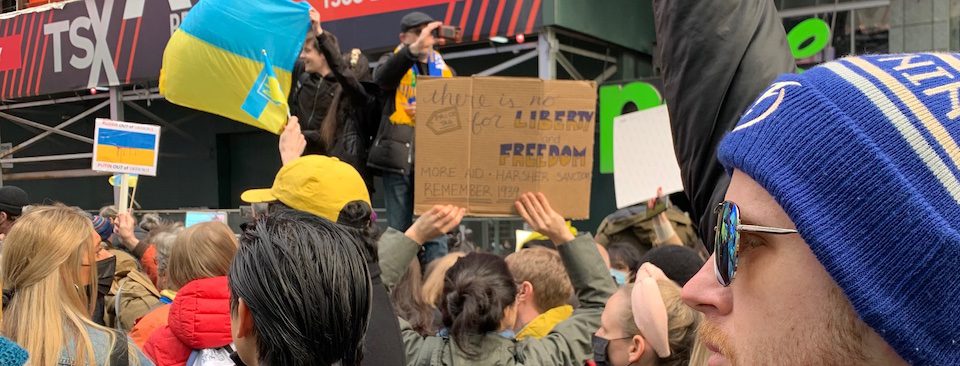

I know what it’s like to feel helpless in the face of horrific events in other lands. I’ve written multiple blog posts about the Russian invasion of Ukraine and ways that people can help the Ukrainians suffering under nightly terror bombing.
Today, though, many people in the U.S. are the ones needing help. With immigration raids targeting people due to the color of their skin or their speaking of non-English languages; with those captured enduring unspeakable conditions in detention facilities, being deported to third countries, or disappearing altogether; with formerly peaceful city streets patrolled by soldiers; and with moves to imprison political dissidents, many people in other countries are horrified. How can the beacon of democracy, the country that freed the world from Nazi terror and totalitarian Communism, become a police state? And what can we, from abroad, do to help bring democracy back to this former bastion?
Decades of work with pro-democracy activists in other dictatorial regimes has given me some experience in this area. For instance, during the Pinochet dictatorship in Chile I worked with Chilean musicians both in exile and performing underground inside the country. I organized concerts to bring them and their stories to audiences in the U.S. and raised money to help support them in their work. In one case, a group of us allies arranged for a musician battling lymphoma, a form of cancer, to receive medical care for free at Stanford University Medical Center. (He was successfully treated and went on to be a major figure in the broad-based movement that ended the dictatorship in 1990.)
Below are six concrete ways that individuals and their elected representatives in other countries can help:
1. Individuals are already being targeted in campaigns of vengeance. Some of those individuals, like former FBI director James Comey and New York State Attorney General Letitia James, have vowed to stay and fight the baseless charges against them. But others, like the Salvadoran-born construction worker Kilmar Abrego Garcia or Palestinian student Mahmoud Khalil, don’t have the resources or stature to fight. Still others, targeted because of unfortunate social media posts, have been driven from their homes, threatened with arrest by local officials in Trump-controlled “red states”, or are receiving credible death threats from right-wing paramilitary groups. A Rutgers University professor who had studied antifascist movements, Mark Bray, fled last week with his family because of these threats. Spain offered asylum to Dr. Bray and his family. Other countries need to do the same, and do what they can to provide a dignified and productive life for others who have become special targets. They need to let those who have fled tell their stories, and spread awareness of the circumstances that forced these dissidents and targets from their homes.
2. Scientists and other professionals are losing their jobs and financial support. It does no one good when highly trained experts on environmental sustainability, climate change, and infectious diseases, for example, are unemployed or driving rideshare vehicles to support their families. If you have a business or hiring authority, offer jobs to scientists, scholars, professionals, and other experts so that their skills and knowledge don’t go to waste. The same with students who have recently graduated and can’t find work in the U.S. I know that France has instituted a program to lure U.S. scientists, and a friend’s neighbor has already moved their family overseas to take one of those jobs. As with the German scientists (many of them Jewish) who fled the Nazis, and the emigrés who fled the Soviet Union and its satellite states, our loss will be your gain.
3. When the U.S. leader raised tariffs on Canada and threatened to make the country the “51st state,” echoing Putin’s threats toward its neighbor Ukraine over the years, Canadians engaged in targeted boycotts focusing on states that supported the MAGA movement such as Florida. In fact, tourism from Canada is way down, and Florida businesses are starting to suffer. Targeted boycotts change minds by hitting the regime’s supporters where it really hurts — in the pocketbook. Boycotts played a major role in ending the apartheid regime in South African in the 1990s. Even if there are no elections, or no elections that are free and fair, pressure from people who are suffering economically will ultimately weaken the regime.
4. Material support for dissidents within the country is important, and there are ways of doing it even with restrictive laws. This kind of support is especially helpful for the writers, musicians, and artists who may have difficulty selling their work because of censorship. As my organization did with the Chilean musicians in the 1980s, bring these creatives on tour and have them tell their stories. Authors for children and teens whose books are being banned and school visits cancelled in the U.S. can tour your countries and your schools, especially since unlike the U.S., you all are serious about teaching multiple languages to your students. These sales and school visits fund the work that our threatened creatives are doing in the face of repression. It will also help us to further our work within our country, because people still need music, art, and stories that affirm our diverse backgrounds and inclusive values.
In addition, as my organization helped the ailing musician receive medical care that he could not receive in his own country, you can help by arranging medical or other care — including care for PTSD, which one of the other musicians received in Canada after his release from a political detention camp in Chile — for dissidents within the U.S. Reproductive and gender affirming care are two areas of special need, but as health care in general becomes less accessible and affordable, people fighting to restore democracy will need the medical and psychological resources to sustain the fight.
5. One of the first regime acts last spring was to end funding for Voice of America, which broadcast Radio Free Europe, Radio Liberty, and other radio programs to unfree lands. While this was a blow to listeners chafing under dictatorships in Europe, the Middle East, Africa, and Asia, I suppose it makes sense for a country to suspend a pro-democracy radio broadcast when the broadcasting country is no longer a democracy. But if your country still is a democracy, you can broadcast radio and internet programming into unfree nations. As our own news media increasingly bends the knee, we need reporting that offers different perspectives. Those broadcasters and other media outlets should hire the journalists that have been fired and talk show hosts and comedians whose programs have been cancelled. We miss them! And we need their voices. These performances give us happiness and hope, much like rock music did for young people growing up under totalitarian communism.
Among the programs on offer can be readings of banned books. In the event that Project 2025 is successful in replacing the U.S. Constitution, audio broadcasts from a hypothetical “Radio Free America” may be the only way we can access these books (particularly books featuring LGBTQ+ characters), as Project 2025 calls for their publication and distribution to be criminalized.
6. And probably the most important: Don’t make the same mistake we did! If you are still fortunate enough to vote in free and fair elections, don’t vote for candidates and parties that support what’s going on in the U.S. or that seek to restrict democratic freedoms in your country. Do you really want troops in your streets, people disappearing, or people forced into hiding or exile because of the color of their skin, their national origin, their sexual orientation or gender identity, or their political views? Many of you have experienced these horrors more recently that USAmericans have, which may be why we threw our democracy away over the price of eggs and gasoline. But ultimately, no place is safe, and no freedom can be taken for granted.
 *
*
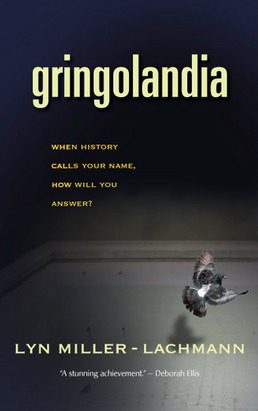
My solidarity work in the 1980s informs my debut traditionally published YA/adult crossover novel, Gringolandia. If you’re interested in taking part in international solidarity work to support people fighting for democracy in their countries, I suggest reading this book. Through the eyes of a 17-year-old boy who fled Chile with his mother and sister after his journalist father’s arrest and imprisonment, it explores the lives of activists and refugees and the challenges faced by people (like his girlfriend) who try to help.