
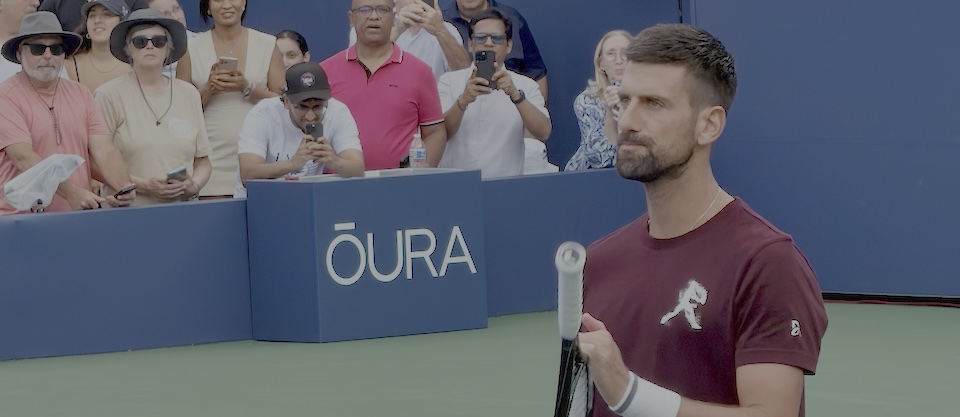
The U.S. Open has come to town, and my son managed to get grounds passes for a couple of the days despite the steep rise in ticket prices. (They’re the result of bots and scalpers buying up the tickets as soon as they go on sale; the USTA still sells the grounds passes for $65 each.) Unfortunately, the player he wanted to see, Novak Djokovic, had already lost an epic five-set first round match that left the aging star ill and near collapse.
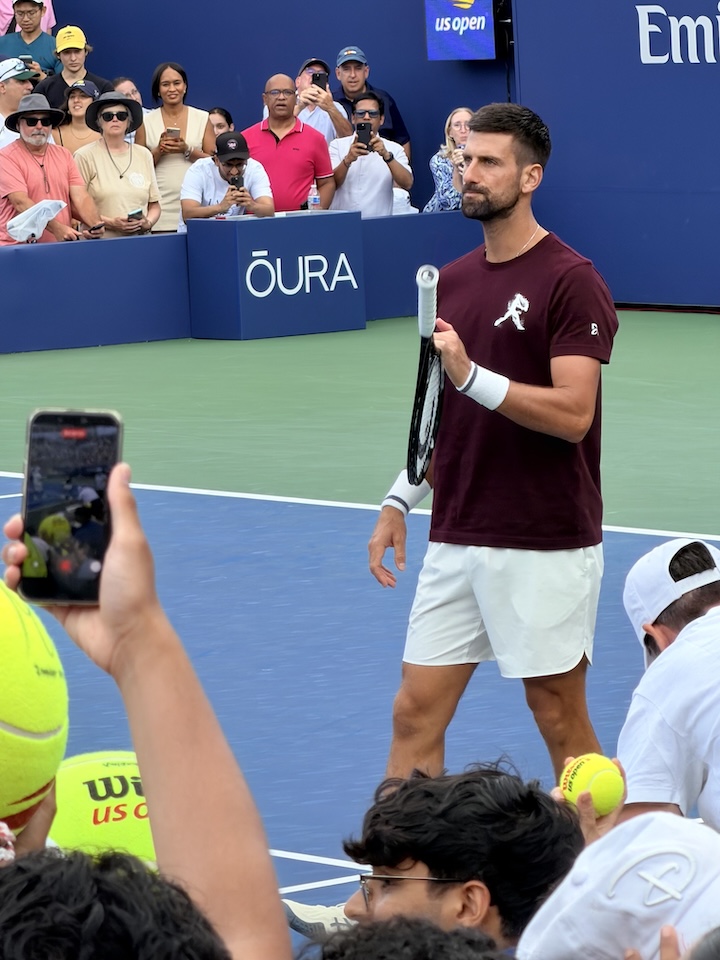
My son is a Novak Djokovic superfan and is coming to realize that his idol will not win his 25th Grand Slam and break the all-time record. In fact, Djokovic is pondering retirement, a process that filmmaker Jason Hehir (The Last Dance) chronicles in the recently released documentary The Wolf in Winter. When Derrick started supporting Djokovic, the player was seen as a villain, an interloper in the wholesome rivalry between Roger Federer and Rafael Nadal. Derrick discovered that supporting an unpopular player from an unpopular country — Serbia, best known for launching a world war and a genocide — meant shorter lines to get stuff signed. At the U.S. Open in 2021, Derrick and Lindsey brought the twins to watch Djokovic practice, and his wife, Jelena, posted their picture on her Instagram feed. A year later, he got to pose for a professional photograph with the star at a media event in Times Square. However, Derrick is now, or soon will be, a fan without a player.
I don’t see Derrick joining the Carlos Alcaraz bandwagon, as some of my friends have done. It’s an easy road for Rafa fans to support Carlitos, but the fans of villains must choose carefully because their behavior can cross the line. Nick Kyrgios, who Derrick dragged me to see in the broadcast booth at the U.S. Open two years ago, tested positive for cocaine a couple of months ago and is currently serving a suspension. Last year Derrick took the twins to see Daniil Medvedev. Fortunately, the boys became tired and cranky, and they left before Medvedev threw a tantrum in the middle of his first round loss.
Because of Derrick’s enthusiasm for tennis, as well as that of a friend in Albany who was a Rafa Nadal superfan, I, too, developed an interest in the game. I consider myself an unlikely tennis fan. I suffered through tennis lessons as a child and failed to progress despite my parents’ investment. (I could say the same for four years of piano lessons and the charm school my mother signed me up for in eighth grade.) I also found the girls who excelled at tennis to be snooty and mean. The top player in my high school, who won a tennis scholarship to a prestigious university, had bullied me along with her circle of friends. I didn’t want to have anything to do with tennis, except that having family members and friends who are really into the sport and the player fandoms got me hooked as well. And like Derrick, I’m having a fandom crisis.
The player I picked out to follow back in 2020, as things started to reopen after the pandemic, was the bookish young Polish star Iga Świątek. Shy and socially awkward, she seemed somewhat dazed by her early success and her rise to the #1 ranking after Ashleigh Barty’s sudden retirement in March 2022 at the age of 25. She said she cried for 40 minutes after she heard of Barty’s retirement and didn’t realize that people could actually choose to quit in their prime like that. In the years after Barty left, Świątek spent 125 weeks as #1, passing up her predecessor’s tenure at that spot by four weeks. And then she went into a slump, losing the top spot to Aryna Sabalenka. (I am not a fan of Sabalenka, the Belarusian whose photo ops with Alexander Lukashenko shortly after he stole the presidential election in 2020 lent legitimacy to a tyrant who has filled the country’s prisons with his opponents. But my daughter is, because she connects with Sabalenka’s experience of suddenly losing her beloved father.)
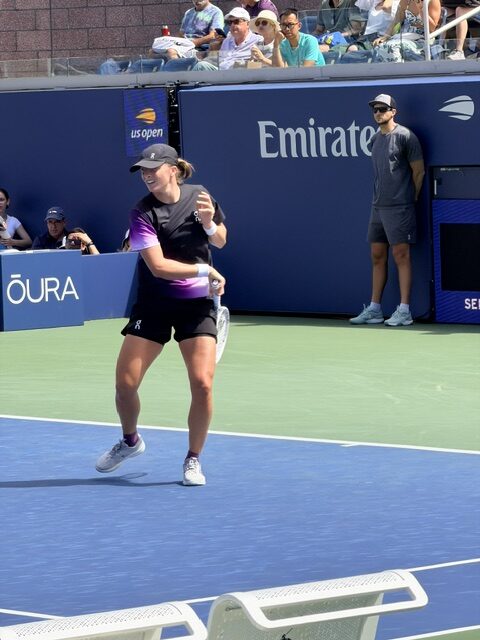
I’ve found that the media tends to treat women players far more harshly than men, and as Świątek has fallen in the rankings, both Polish and international media have ruthlessly attacked her for every bad result. (I even see them doing this now to Sabalenka due to her party-girl image; if she underperforms in a tournament, she gets questions about spending more time partying than practicing.) As a fan, I feel required to support my player even if she exits tournaments early and is ranked outside the top 10. However, I worry that she may decide like Barty at the top of her career or Bjorn Borg after stronger players overtook him, that it’s time to retire and pursue a different career while she’s still young enough to make that change and healthy enough not to suffer the long-term effects of playing the sport the way poor Djokovic is now suffering.
The alternative is to pursue the sport as a platform for other interests. Naomi Osaka, another promising star who took a yearslong leave of absence for mental health reasons and then to have a baby, has returned as a fashion model and entrepreneur in addition to playing tennis. Świątek is a Lego builder and has recently relaunched the book channel she started in 2023. She’s an entertaining booktalker who stands out for often being a little too honest. For instance, she recommended a book that she said started too slowly and the characters weren’t likable at first, but the second half made it all worthwhile. I thought that some of us don’t have time to stay with a book that takes forever to get going, but I’m not sure how much free time she has either. In any case, if you’re a librarian looking for a tennis player to follow, she’s the one.
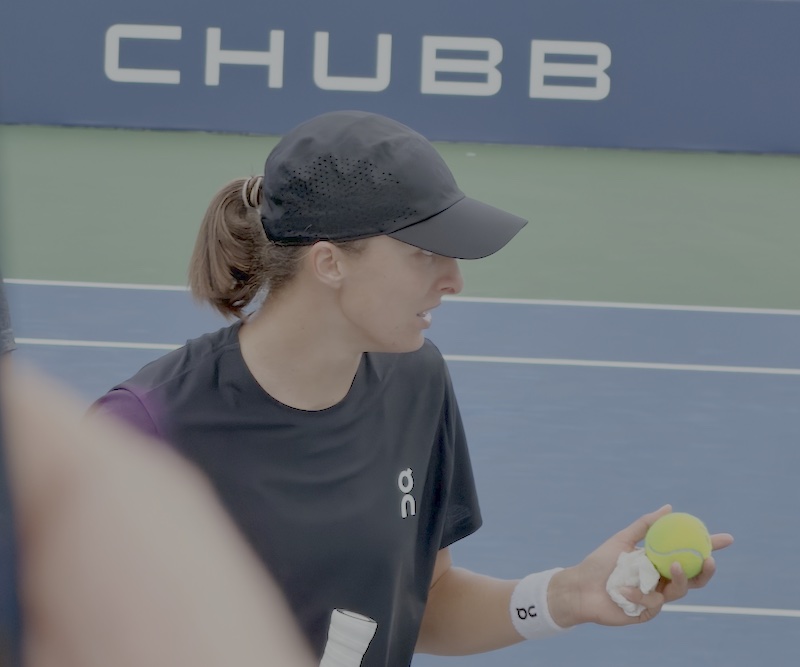
While my favorite spectator sports remain basketball, thanks to Derrick when he was growing up, and soccer, thanks to living in Portugal for a time, tennis is my fandom sport. That’s in large part because it’s an individual sport, and it’s easier to get to know the players, their personalities, their backstories, and the challenges and obstacles they face. For the writer looking to flesh out characters, these individuals offer compelling plot lines, from the “wolf in winter” refusing to let go even though his physical abilities are fading, to the young star chasing, with limited success so far, the next level to keep up with ever-tougher competition.
As writers, we face many of the same issues — and that’s especially true of those who achieve success early and then fear that they have peaked too soon — but we’re advised to to keep our eyes on our own paper instead of comparing our progress to others. That’s a luxury a person in a competitive sport does not have. Nonetheless, there are lessons to be had in their career arcs, not the least of which is finding value in pursuits that cannot be measured by wins and losses.