Last week, the wannabe despot of the United States hosted the 2026 World Cup draw at the Kennedy Center, the cultural institution that he took over upon his inauguration in January. In doing so, he and FIFA snubbed Las Vegas, originally reported as the venue of choice for this much-anticipated event. The venue change was far from the most unprecedented move. That distinction would go to the bestowing of FIFA’s inaugural “Peace Prize” upon Donald Trump, who was still smarting from not receiving the Nobel Peace Prize earlier in the fall.
In return for this award, Trump promised to change the name of the sport in the U.S. from “soccer,” to the more internationally accepted “football,” leaving open the question of what the rugby influenced American football — right now the country’s most popular sport — would be called. He has suggestions. Like other autocrats who see their rise to power as the Year Zero for their domains, he believes in the importance of name-change decrees. The Gulf of America. The Department of War. The Trump-Kennedy Center.
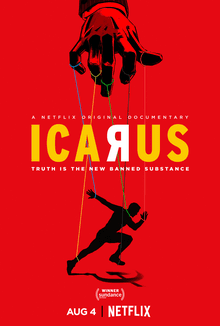
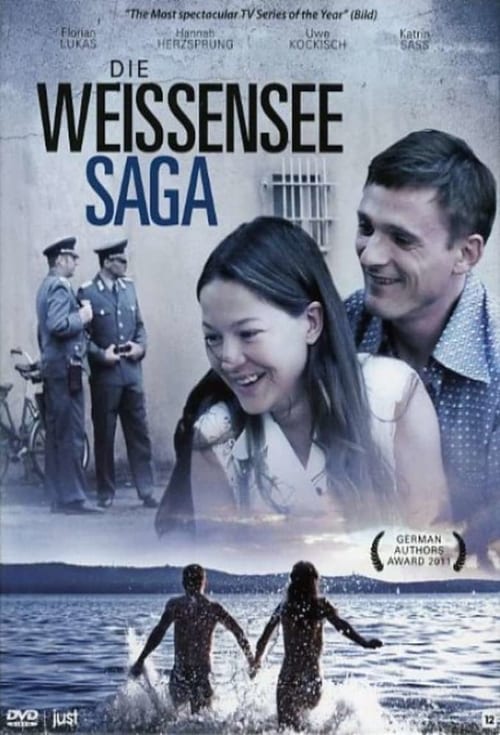 He’s not the first despot to get involved in sports. In fact, the relationship between sport and dictatorship has a long history. Major moments in the twentieth century include Hitler’s elaborate show of the 1936 Olympics in Berlin and the Communist Bloc’s use of sports as a weapon in the Cold War. The Soviet Union and its satellite states prioritized international competitions to demonstrate their strength and power over the West. They had an elaborate program of breeding and cultivating young athletes that echoes even today; one can see it the biographies of standout athletes from Central and Eastern Europe whose parents and/or grandparents were veterans of international competitions. In my author’s note for Torch, I mention a friend whose parents sent her unaccompanied from Cuba to the United States as part of Operation Pedro Pan because the Castro regime wanted to ship her to the Soviet Union at eight years of age to train as an Olympic swimmer. The German television series “Weissensee” (available in the U.S. as “The Weissensee Saga”) contains a plot line involving the only son of an ambitious Stasi official who is sent to a boarding school to train as a gymnast. There, he is given performance-enhancing drugs that result in his near death, a kidney transplant, and the end of his athletic career. Since the Soviet Union’s breakup, Russian teams in international competitions have gained notoriety for their shameless doping, resulting in suspensions even before dictator Putin’s war on Ukraine. The Oscar-winning documentary Icarus documents this scandal at the 2014 Winter Olympics in Sochi.
 While communist dictatorships prioritized international competitions, many right-wing dictatorships during the twentieth century focused on the national sports structure, backing individual clubs and their superstars and using those clubs as a nucleus to build support and recruit street enforcers. Benito Mussolini was a principal practitioner of this strategy, centering his support on the Lazio football club (for which his grandson played many decades later). While he initially sought to promote sport as a way of improving the fitness of his Italian subjects, he realized that the spectacle itself — watching professionals play — was an even better tool to gain their adoration. In Portugal, the 48-year dictatorship was built on the “Three F’s” — Fátima (the Catholic religion and its institutions), Fado (the then heavily censored musical genre unique to Portugal), and Fútebol. Like Mussolini, dictator António de Oliveira Salazar had a favorite team, Benfica. In fact, he also liked the other Lisbon team, Sporting, as well (to the detriment of both teams’ arch-rival FC Porto) but preferred to back the winner. In turn, he shoveled resources to Benfica, enhancing its superiority. This relationship between Salazar and Benfica included a complicated association between the dictator and Benfica’s Mozambican-born star in the 1960’s, Eusébio, who called Salazar “godfather” and was denied permission from Salazar to leave the country in order to play for an Italian team. More recently dictators have sought photo-ops with noted athletes whose support they have gained (Neymar supporting Jair Bolsonaro in Brazil, for example) or else claimed (an unfortunate photo of Belarusian dictator Alexander Lukashenko with tennis star Aryna Sabalenka two years before the invasion of Ukraine).
Salazar’s connection to Benfica makes an appearance in my novel Eyes Open, as I wondered how his support, which added to the team’s dominance, affected people’s desire to watch. After all, who wants to watch a sports competition when the outcome is all but assured? Apparently, a lot of people do — witness the popularity of WWE, where each match is framed as a battle between good vs. evil, “faces” vs. “heels”, and the face always wins over the heel. As Sónia strolls through her school friend Nídia’s neighborhood to tell Nídia some good news, she listens through open windows:
Men’s loud voices debate
Sporting versus Benfica. Does
Sporting really have a chance
when Benfica, the Leader’s team, has all
the money and the best players?
The story of our lives, Zé Miguel would
say. The outcome already set
in a rigged game.
(But we play along anyway, don’t we?)
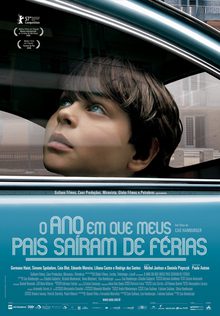 I have fond memories of World Cup matches from years past, but I don’t know how much I’m going to enjoy the one next year. All I can think about are the scenes in the film The Year My Parents Went on Vacation, when young Mauro watches the Brazilian team play in the 1970 World Cup with various groups of strangers, his parents having gone into hiding to flee the country’s fascist dictatorship. The joy of Brazil’s final victory is tempered with the absence that Mauro feels, the state violence that he witnesses, and the cultural dislocation of living with a stranger, a solitary Jewish man who was the best friend of Mauro’s recently deceased grandfather, who Mauro had also never met.
*

RB Media is offering a 50% discount on the audiobook of Eyes Open, read by Soneela Nankani. This promotion runs until January 1, 2026 and is the perfect way to appreciate this verse novel of a budding poet using her words to stand up for justice in a repressive state.